Quick Identification Guide: Do You Have Termites?
Check for Physical Signs
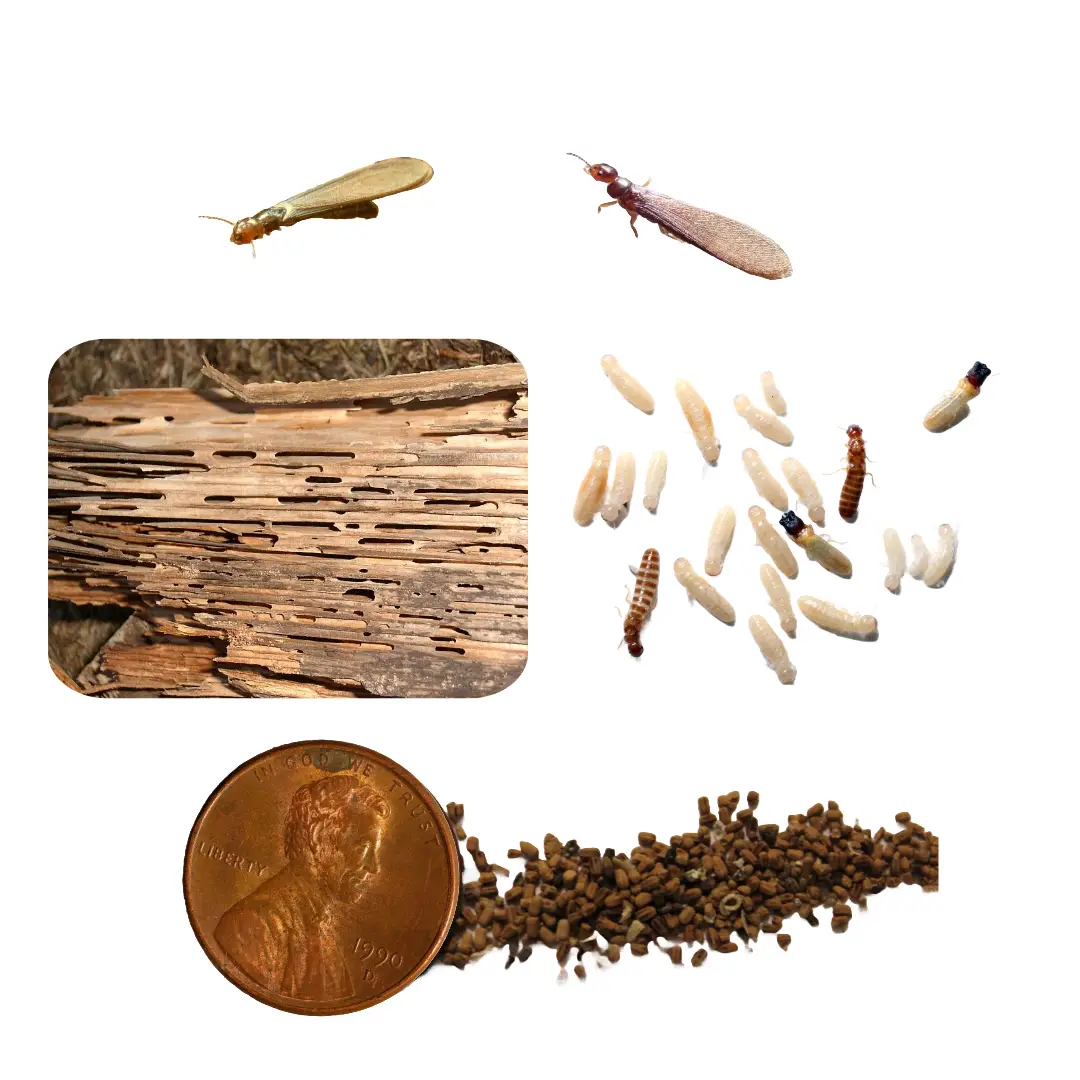
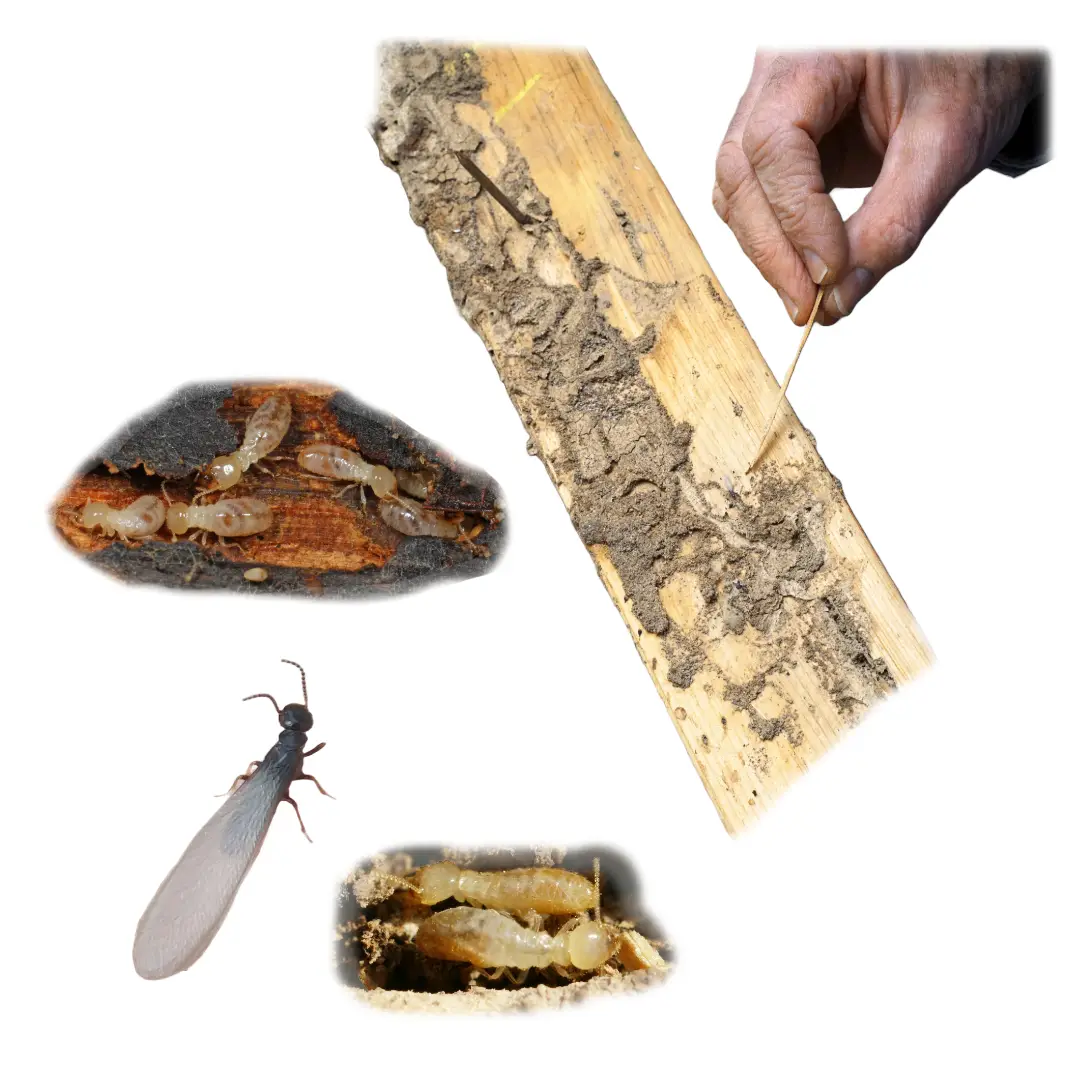
- Mud Tubes: Termites often build mud tubes (small tunnels made of soil and wood particles) along walls, foundations, or other structures. These tubes protect them from predators and keep them moist.
- Damaged Wood: Tap on wooden structures. If they sound hollow or are soft and easy to puncture, it might indicate termite damage. Look for tunnels in the wood.
- Frass (Termite Droppings): Drywood termites leave behind small, pellet-shaped droppings that look like sawdust.
- JJ Greive of Home Inspections Of Puget Sound, CC BY-SA 3.0 <https://creativecommons.org/licenses/by-sa/3.0>, via Wikimedia Commons
Look for Swarmers
- Winged Termites: During the warmer months, reproductive termites (also known as swarmers) emerge to form new colonies. They have two pairs of long, equal-sized wings and can often be mistaken for flying ants.
Check the Wings
- Discarded Wings: After swarming, termites shed their wings. If you find a pile of wings near windows, doors, or light fixtures, it could be a sign of termites.
Differentiate from Ants
- Ants vs. Termites:
- Body Shape: Termites have a straight, uniform waist, while ants have a pinched, segmented waist.
- Antennae: Termites have straight, beaded antennae, whereas ants have elbowed antennae.
- Wings: Termite wings are equal in size, while ants have larger front wings and smaller hind wings.
Differentiate from Other Wood Destroying Pests
- If the above signs don’t match, consider other pests:
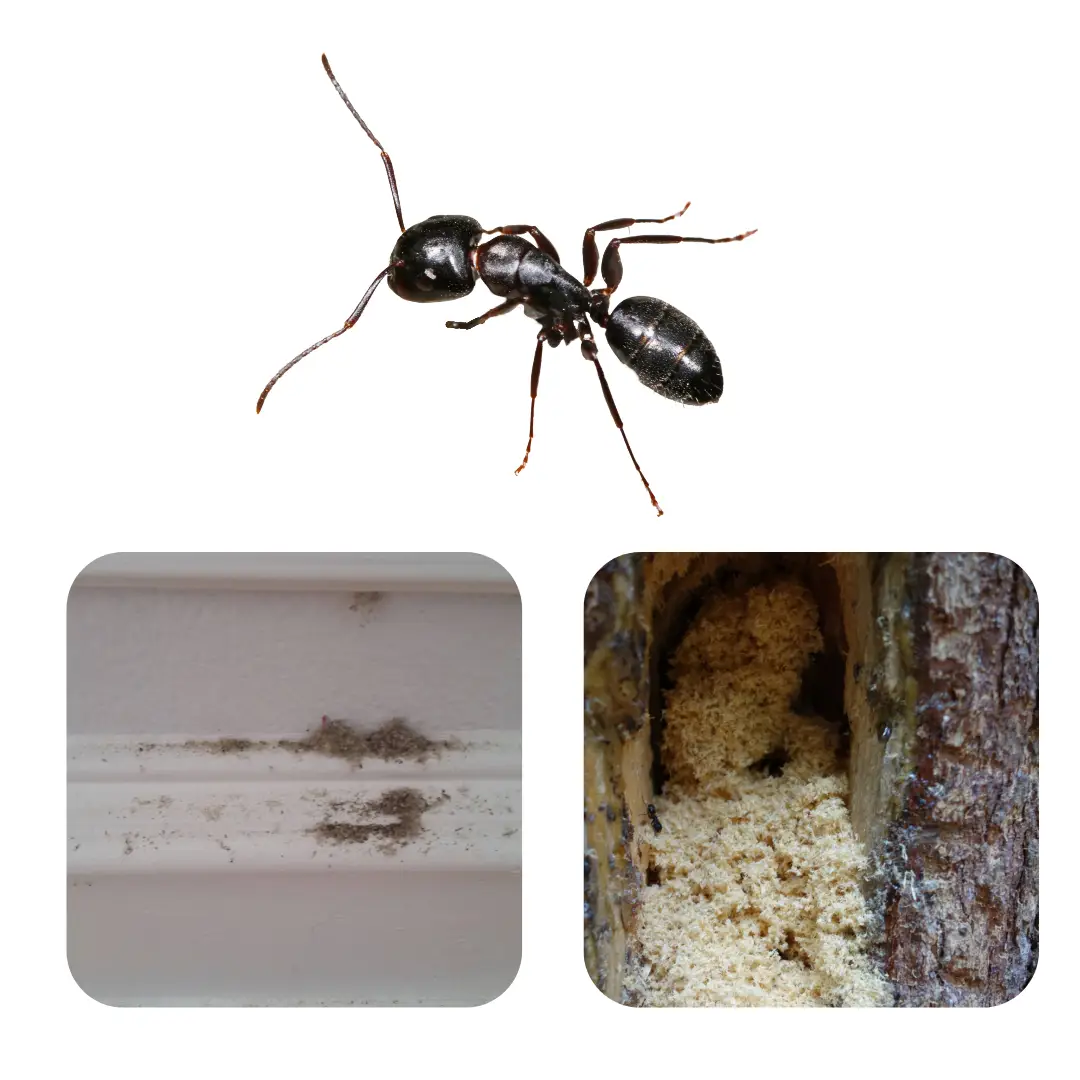
- Carpenter Ants: These can also damage wood, but they do not eat it. Look for sawdust-like material without pellet-shaped droppings and smooth, clean tunnels in the wood.
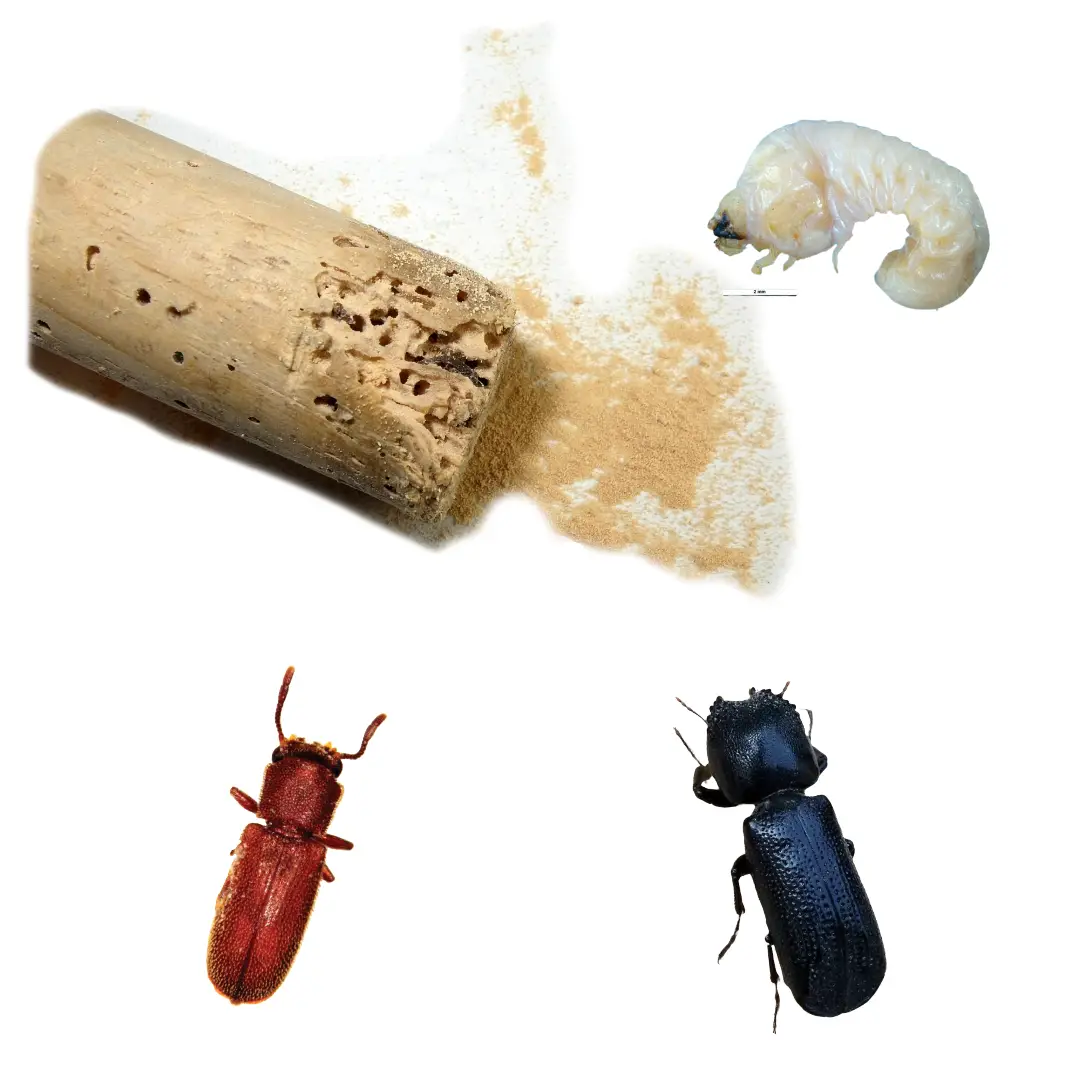
- Powderpost Beetles: These leave behind fine, powdery wood dust and tiny exit holes in wooden surfaces.
Pest Details
Summary
Drywood termites live and feed in dry wood, often found in structural timber, furniture, and hardwood floors. They do not require contact with soil and can infest any wooden structure.
Interior
Wooden beams, flooring, furniture, door frames, window frames, attics.
Exterior
Wooden structures, wooden fences, window frames, door frames, wooden decks, eaves.
Common Signs Of Infestation
- Presence of small, dry, pellet-like droppings (look like tiny footballs) dropping out of a pin hole of infested wood.
- Hollow-sounding wood when tapped.
- Winged reproductive termites (swarmers) emerging from wood, especially in the spring.
- Small holes in wood surfaces and blistering of wood.
Services Needs
A Drywood termite treatment requires specialty services, including fumigation or localized treatments, as they live inside the wood. This is not included in general pest control programs.
Preparation For Service
You can view our drywood termite checklist here.
Pest Details
Summary
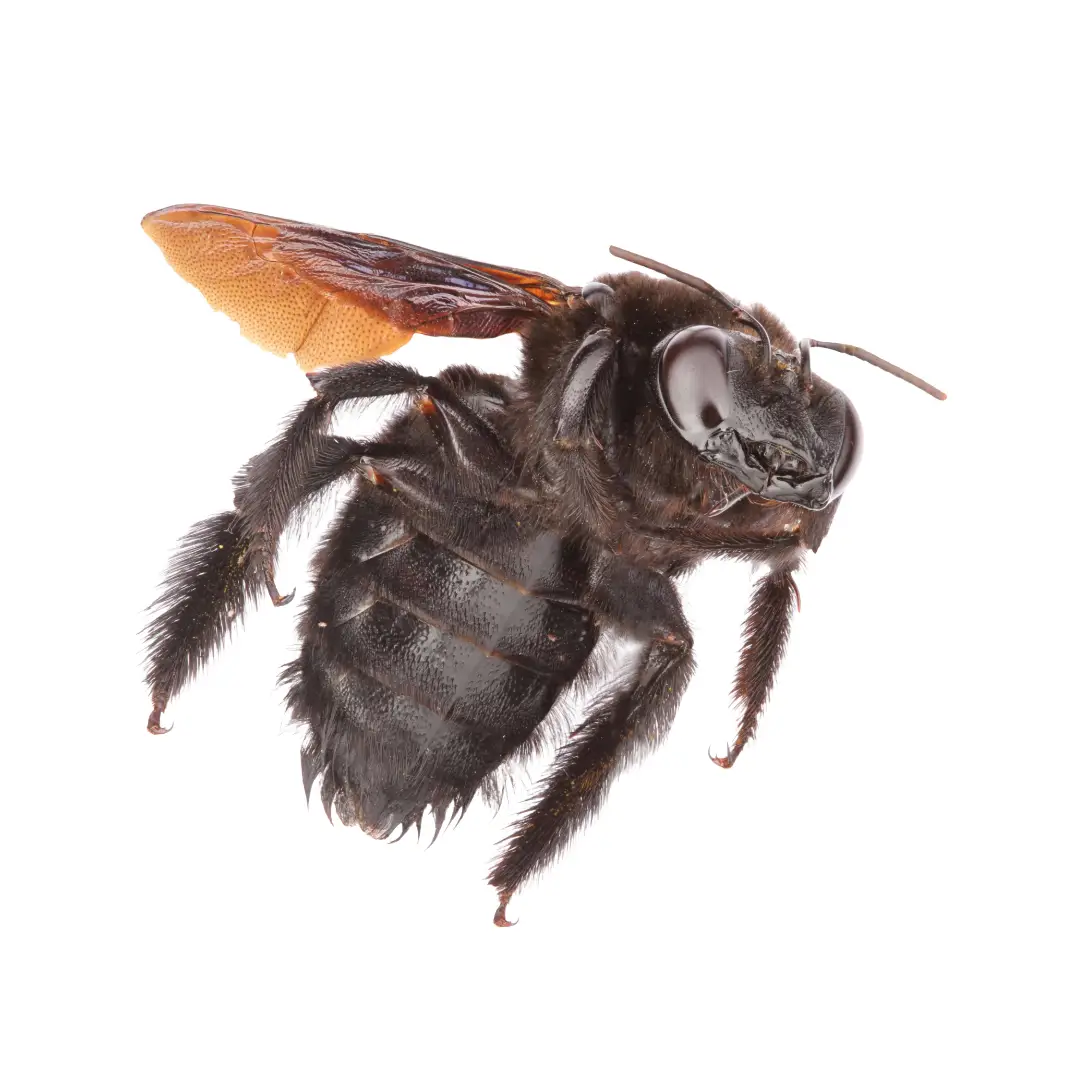
Carpenter bees are solitary bees that burrow into wood to create nests. They are often mistaken for bumblebees but have a smooth, shiny abdomen.
Interior
Rarely found inside homes unless there are wooden structures; may be seen around windows if they accidentally enter.
Exterior
Under eaves, decks, wooden railings, fences, around window frames, under wooden siding.
Common Signs Of Infestation
- Perfectly round holes in wood surfaces.
- Sawdust near wooden structures.
- Yellowish-brown stains on wood (bee excrement).
- Presence of adult bees hovering around wooden structures.
Services Needs
A Carpenter Bee treatment is a specialty services and not covered under our general pest control program.
Preparation For Service
Inform the pest control professional of any specific areas where bees have been seen..
Pest Details
Summary
Subterranean termites live in colonies underground and build mud tubes to access above-ground food sources. They are known for causing significant structural damage to buildings by feeding on wood.
Interior
Wooden beams, flooring, walls, crawl spaces, basements, near plumbing pipes, inside wall voids.
Exterior
Soil around foundations, under wood piles, in mulch, under landscaping timbers, around tree stumps.
Common Signs Of Infestation
- Mud tubes on exterior walls, foundations, or crawl spaces.
- Damaged or hollow-sounding wood.
- Presence of swarmers (winged termites) inside or around the home.
- Discarded wings near windowsills, doors, or other entry points.
- Bubbling or uneven paint.
Services Needs
Subterranean termite treatment typically a specialty services, including soil treatments, and/or baiting systems. This is not usually included in our general pest control programs.
Preparation For Service
Remove any wood-to-soil contact around the home’s exterior.
Reduce moisture levels around the foundation by repairing leaks and ensuring proper drainage.
Move any wood piles or debris away from the house.
Inform the pest control professional of any specific areas of concern.
Provide access to all areas of the home, including crawl spaces and basements, for thorough inspection and treatment.
Pest Details
Summary
Powderpost beetles infest and damage wood, leaving behind fine powdery frass. They can cause significant structural damage over time.
Interior
Wooden beams, flooring, furniture, walls, attics, basements.
Exterior
Wooden structures, fences, decks, outdoor furniture, logs.
Common Signs Of Infestation
- Small round holes in wood surfaces.
- Fine powdery frass around infested wood.
- Damaged or weakened wood.
Services Needs
Powderpost beetle treatments are a specialty service and are not included in our general pest control programs.
Preparation For Service
Follow Our Powder Post Beetle Prep Sheet
Pest Details
Summary
Excavates wood to create nests
Interior
Wall voids, hollow doors, and insulation
Exterior
Dead trees, firewood, wooden structures
Common Signs Of Infestation
Wood shavings, rustling noises in walls
Services Needs
Requires a specialty service.
Preparation For Service
See our preparation sheet
Local Pest Control In Your Area?
Our team of seasoned pest specialists is committed to ensuring a home that is free from pests for your peace of mind.