Carpenter ants and termites cause different East Texas home damage: carpenter ants tunnel through wood for nesting, leaving smooth galleries. Termites eat wood for food, causing structural harm. Critter Gitters Pest Control, serving East Texas, identifies both through certified inspections and offers termite protection plus targeted carpenter ant treatment programs.
Key Takeaways
- Carpenter ants have a single node and evenly rounded profile, distinguishing them from termites visually.
- Carpenter ants nest naturally in trees but invade homes year-round throughout Texas, requiring professional identification.
- Termites and carpenter ants require completely different treatment approaches; misidentification leads to ineffective pest control.
- Wood damage signatures differ between carpenter ants and termites, making proper identification critical for Critter Gitters treatment plans.
Why Does Wood-Destroying Insect ID Matter Here?
Correct identification determines whether your East Texas home needs ant treatment, termite treatment, or both. Confusing carpenter ants vs termites east texas homeowners face every spring wastes money and buys time for real damage to spread. A misdiagnosed infestation continues to cause damage while you seek the right fix.
Texas A&M AgriLife Extension reports that ants, including carpenter ants, cause millions of dollars in structural damage across the region every year. Many homeowners dismiss early warning signs as minor annoyances. That gap between what’s actually happening in your walls and what you assume is happening costs real money. Getting the species right, fast, protects your budget and your foundation.
How can you tell carpenter ants from termites in your home?
Look at what’s left behind. Termites eat wood and leave mud tubes plus damage packed with dirt-like debris. Carpenter ants excavate smooth, clean galleries and push out small piles of wood shavings nearby. Proper carpenter ant damage identification starts with those shavings — they signal excavation, not consumption.
Who handles wood-destroying ants near Huntsville, TX?
Critter Gitters has served East Texas as a family-owned pest control company, building deep familiarity with [wood-destroying ants huntsville tx](https://cgpest.com/location/pest-control-huntsville-tx/) properties commonly face. Every job starts with inspection and diagnosis rather than a quick fix. Correct ID drives the entire treatment plan.
Structural protection includes:
- Termite inspections
- WDO (wood-destroying organism) reports
- Advanced termite protection systems
That inspection-first approach means you get a targeted solution, not a guess.
Carpenter Ants Or Termites: What’s The Difference?
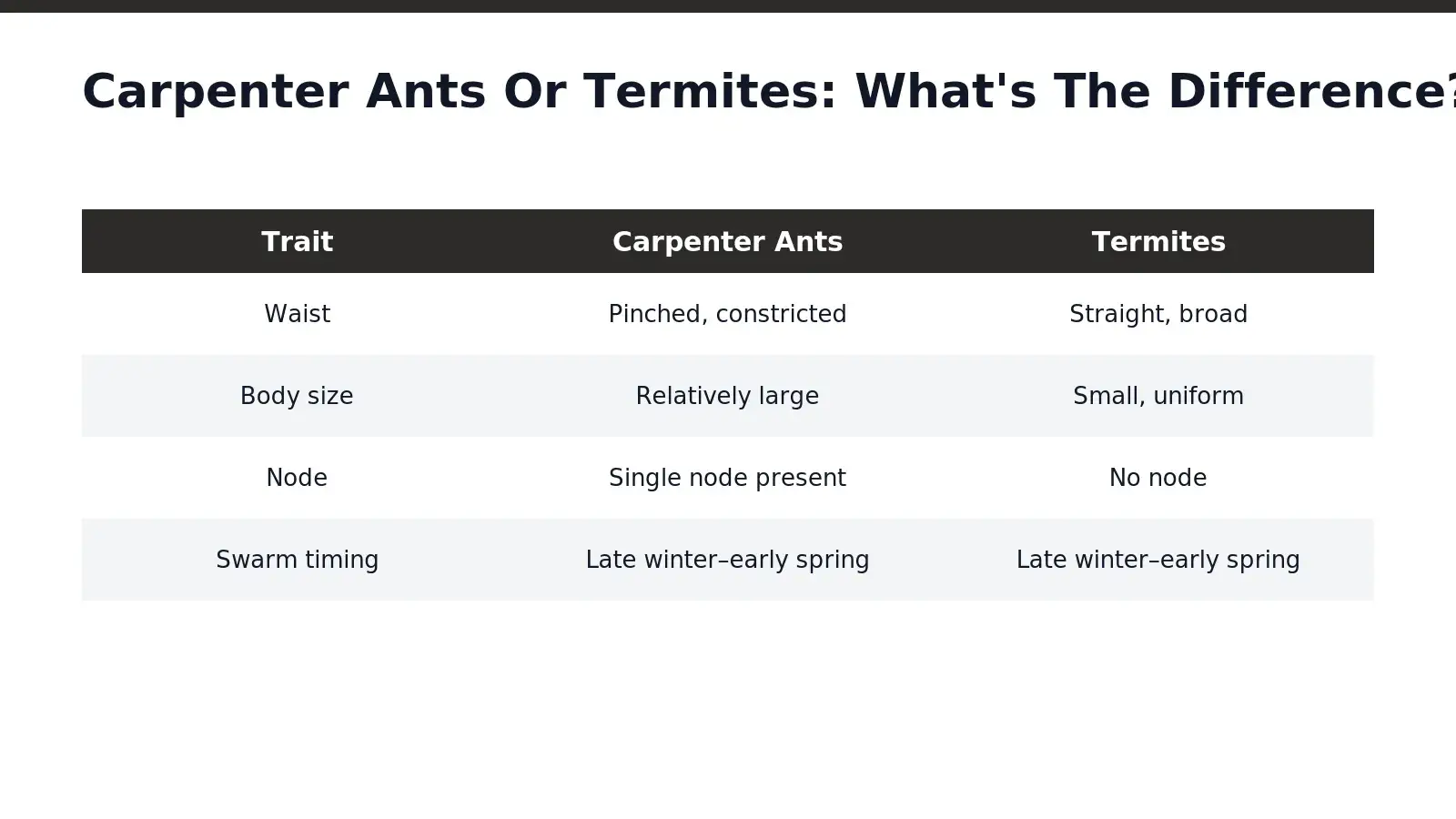
Body shape settles the question faster than any other clue. Carpenter ants show a pinched waist between the thorax and abdomen, while termites carry a straight, broad waist with no constriction at all. That single visual detail helps you avoid carpenter ant damage identification mistakes before you ever call for help.
Size and structure matter too. Carpenter ants vs termites east texas comparisons often start with the ants themselves: they’re relatively large, built with a single node, and have an evenly rounded body profile you can spot with a flashlight and a little patience. Termite workers, by contrast, look pale, soft-bodied, and uniform from head to tail.
How do you tell carpenter ant swarmers from termite swarmers?
Timing is your first hint. Winged carpenter ant swarmers show up most often in late winter and early spring across Texas, right alongside termite swarmers, which is exactly why the two get confused. Look closely at the wings and waist rather than relying on season alone. Both insects swarm around the same weeks.
Why does correct identification matter for your home?
Treating the wrong pest wastes time and leaves the real problem untouched. [Wood destroying ants Huntsville TX](https://cgpest.com/location/huntsville-tx-termite-control/) homeowners deal with don’t respond to termite-specific treatments. Termite colonies won’t budge from ant control methods either. Getting this identification right the first time protects your budget and your home’s structure.
Critter Gitters technicians, led by an Associate Certified Entomologist, combine scientific training with hands-on field experience to pinpoint exactly which insect has moved into your property. You get a confirmed answer, not a guess, before any treatment plan begins.
How Can You Spot Carpenter Ant Damage?
Faint scratching noises inside your walls at night, paired with small piles of wood shavings near door frames or window sills, signal a carpenter ant colony at work. These pests differ sharply from termites in how they treat your home’s lumber. Understanding that difference helps you catch trouble before it spreads through your walls, porch beams, or attic framing.
Termites eat wood as a food source, breaking down the fibers as they go. [Wood destroying ants in Huntsville, TX](https://cgpest.com/location/pest-control-huntsville-tx/) work differently. Carpenter ants excavate smooth tunnels through wood that’s already moist or softened, carving out space to nest rather than to feed. That distinction matters when you’re trying to figure out carpenter ants vs termites East Texas homeowners deal with each spring and summer.
What Does Carpenter Ant Damage Actually Look Like?
Carpenter ant damage identification starts with texture, not just noise. Look for smooth, clean galleries carved along the wood grain, often near moisture sources like leaky gutters, damp crawl spaces, or rotting fence posts. You’ll rarely see the mud tubes termites leave behind — instead, you’ll find sawdust-like debris called frass piling up below the entry point.
When Should You Call a Professional?
Once you notice shavings or hollow-sounding trim, don’t wait for the damage to spread. A trained technician identifies the infestation, locates the colony, and seals entry points so the ants don’t return. Critter Gitters Pest Control applies scientific precision. Eco-conscious methods across East Texas properties, aiming for lasting results instead of repeat visits.
Quick signs to check around your property:
- Scratching sounds inside walls, especially at night
- Frass (wood shaving piles) near baseboards or beams
- Smooth, clean-edged tunnels in damp or damaged wood
- Winged ants near windows in late winter or early spring
Which Signs Point To Termites Instead?
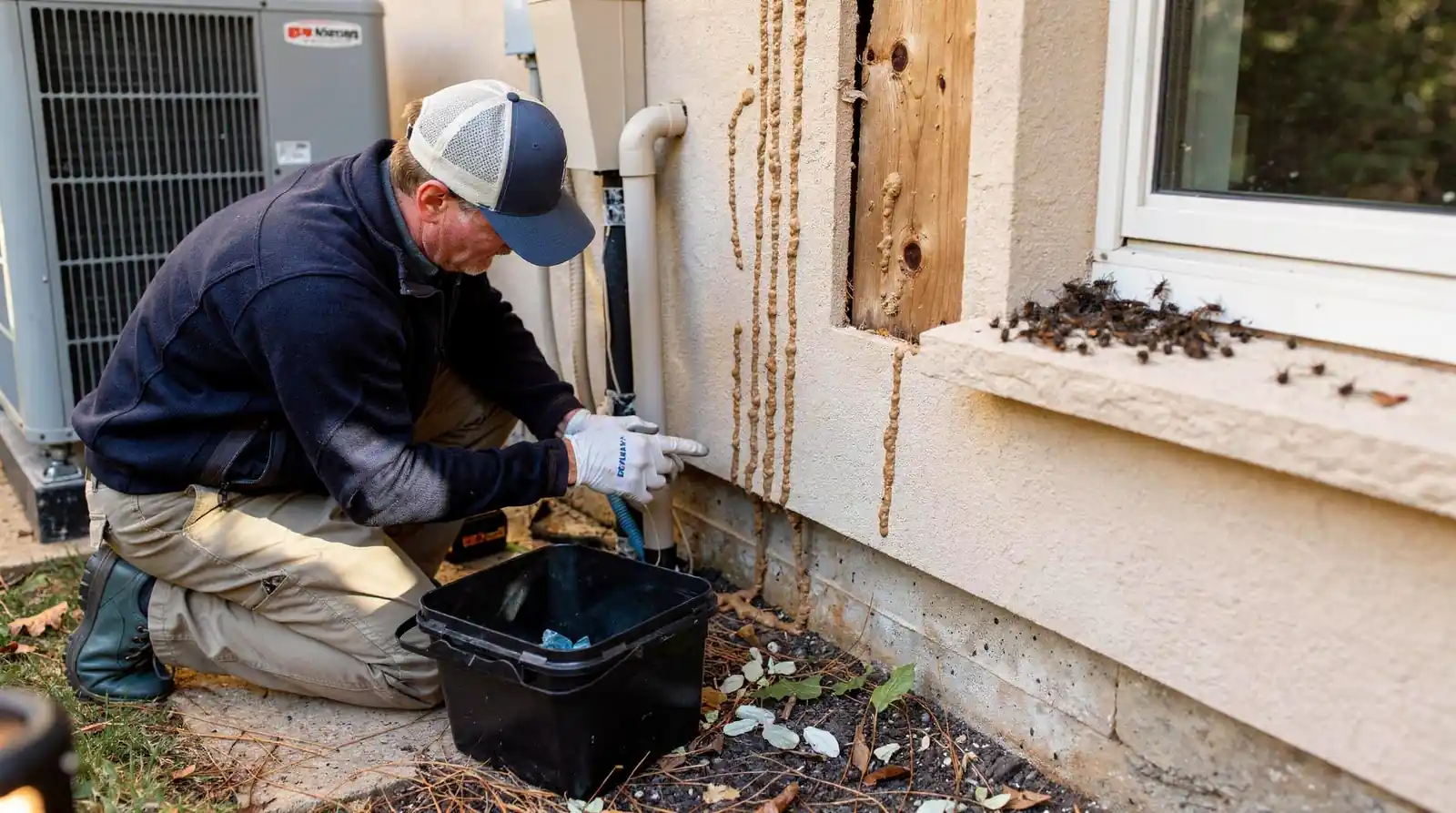
Mud tubes running along your foundation signal termites, not carpenter ants. Hollow-sounding wood, sagging floors, and discarded wings near windowsills point the same direction. Since carpenter ants vs termites east texas confusion costs homeowners time. Money, spotting these differences early protects both your wallet and your walls.
Termites feed on wood itself, while carpenter ants only tunnel through it to build nests. That distinction matters when you’re trying to decide what’s chewing through your baseboards.
How Can You Tell Termite Damage From Carpenter Ant Damage?
Termite-damaged wood often looks crushed or crumbly, with mud or soil packed into the galleries. Carpenter ant tunnels, by contrast, stay smooth and clean, almost sanded in appearance. Because carpenter ant damage identification hinges on texture and debris type, a close look — or a professional inspection — settles the question quickly.
Since both pests damage wood but demand completely different treatments, misidentifying the culprit wastes money and lets the real infestation continue. Critter Gitters combines ACE-level expertise with Sentricon certification to nail down the correct diagnosis for East Texas properties. That credential, paired with affiliations through the Texas Pest Control Association and NPMA, keeps treatment plans accurate from the first visit. When you’re dealing with [wood destroying ants huntsville tx](https://cgpest.com/location/huntsville-tx-termite-control/) or suspect termites instead, a trained technician follows a consistent sequence — reaching out, inspecting, treating, and following up — so the problem doesn’t just get masked. It gets solved.
What Should East Texas Homeowners Do Next?
Act fast if you spot rustling in the walls or shavings near wooden trim. Waiting costs you more than a phone call ever will. Critter Gitters maintains dedicated service coverage across East Texas. Houston County, reaching communities where wood destroying ants in Huntsville, TX and neighboring towns cause repeat problems for homeowners.
Scheduling is straightforward. You can request an appointment online or call to get fast service on the calendar. You can enroll in ongoing maintenance protection so new colonies never get a foothold. That kind of consistent coverage matters most in a region where humidity and mature trees keep pest pressure high year-round.
Is treatment safe for kids and pets?
Yes. Every treatment plan is built around eco-friendly methods that are safe for children and animals. Each service comes backed by a full guarantee. You get protection without worrying about what’s being sprayed near your family.
Why does certified expertise matter for wood-destroying pests?
Correctly telling carpenter ants apart from termites in East Texas takes trained eyes, not guesswork. Certified technicians identify the pest correctly the first time, so you avoid wasted treatments and continued damage. That expertise is the foundation of real peace of mind.
Before your next inspection, keep this checklist handy:
- Note any wood shavings, rustling sounds, or discarded wings near your home’s exterior
- Request an appointment online or call to schedule promptly
- Ask about ongoing maintenance plans for year-round protection
- Confirm treatments are eco-friendly and pet-safe before service begins
FAQ
What’s the main visual difference between carpenter ants and termites?
Carpenter ants have a pinched waist, single node, and evenly rounded body profile. Termites carry a straight, broad waist with no constriction and appear pale and soft-bodied.
How does carpenter ant damage differ from termite damage?
Carpenter ants excavate smooth, clean galleries and push out small piles of wood shavings nearby. Termites eat wood and leave mud tubes plus damage packed with dirt-like debris.
Conclusion
In closing, distinguishing carpenter ants from termites protects your East Texas home from costly structural damage. Both pests demand prompt professional identification and treatment to prevent years of hidden destruction. When you spot wood-damaging insects or suspect an infestation, a thorough inspection by certified experts reveals the threat and delivers the targeted solution your property needs. Early action and expert guidance ensure your home stays protected.