
Fire ants in a Crockett yard rarely announce themselves until someone gets stung. By the time a mound is the size of a dinner plate, the colony under it has been growing for a while, and it may not be the only one. Once you know what to look for, you can spot new mounds early, while they’re small and easier to deal with.
How to spot a fire ant mound
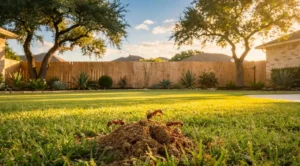
A fire ant mound doesn’t look like the neat little cone with a hole on top that most ants build. Look for:
- A dome of loose, fluffy soil, like someone worked the dirt with a fork. It can be as small as a fist or as wide as a foot and a half.
- No opening on top. Fire ants come and go through tunnels underground, so you won’t see an entrance hole in the middle.
- Fresh, darker soil after rain. Colonies push up new soil when the ground is wet, so mounds often show up a few days after a heavy rain.
- Reddish-brown ants of mixed sizes when the mound is disturbed, from tiny workers to noticeably larger ones.
Where to check around the house
Fire ants like sun and loose soil, but they also love anything that holds warmth or shelters the colony. Walk the yard and look:
- Along sidewalks, driveways and the edges of a slab
- Around the foundation and under steps
- Next to the AC unit, electrical boxes and well equipment, where colonies can damage wiring
- Along fence lines and around posts
- In open, sunny parts of the lawn and around the garden
- Around barns, sheds and shops, where hay, equipment and feed sit on the ground
Some colonies build barely any mound at all, especially in mowed lawns or right after the ground has been disturbed. If kids or pets keep getting stung in the same spot, look closely there even if you don’t see a dome.
A safe way to check a suspect mound
Never test a mound with your hand or your foot. Use a long stick or a tool handle, stand back, and gently poke the edge of the mound. Fire ants pour out fast and run up anything touching the mound. If that’s what you see, you have your answer. Back away and brush off any that hitched a ride.
Keep kids and pets away while you check.
Why one mound turns into several
On warm days after rain, colonies send out winged ants to mate and start new colonies. Those new colonies grow into small mounds over the next month or two, which is why a yard that looked clear can end up dotted with them. Some colonies also have more than one queen, so a property can end up with many mounds close together.
Kicking a mound, digging it up or flooding it with a hose usually kills the workers you can see but not the queen deep underground. The colony often just moves a few feet and builds again. That’s why yards seem to “grow” mounds after a homemade fix.
What to do once you’ve found them
- Walk the whole property and note every mound you find, not just the one that got someone stung.
- Leave the mounds alone until you’re ready to treat. Disturbing them first makes the colony harder to reach.
- Use a fire ant bait labeled for lawns, spread in warm weather when the ground is dry, ants are out foraging and no rain is expected soon. The workers carry the bait back to the queen. Follow the label exactly.
- Treat problem mounds directly where people walk or play, using a product labeled for individual mounds.
- Check again after the next rain, when new mounds are easiest to see.
When to call for help
It’s worth having someone look if mounds keep coming back, if they’re in or near the AC unit or electrical boxes, if someone in the house reacts badly to stings, or if you’re dealing with acres, barns or a shop rather than a town lot. Critter Gitters handles fire ant control for homes and properties, including farms, barns and shops around Crockett.
The inspection is free, and you get the price after the inspection. If all you need is a one-time treatment, we can do that. It just takes a short service agreement.
Our treatments are eco-friendly and pet friendly. Keep pets off treated areas until the product dries.
For more on ants in Crockett, visit our Crockett ant control page, or call 936-261-7965.
Quick answers
Do fire ant mounds have a hole on top?
Usually not. The ants use underground tunnels, so the mound is a dome of loose soil with no clear entrance.
Why do mounds appear after rain?
Wet soil pushes colonies to build up, and rain also triggers mating flights that start new colonies.
Does boiling water or kicking the mound work?
Kicking or digging rarely gets the queen, so the colony often moves and rebuilds nearby. Very hot water poured on a mound works only part of the time and can kill your grass. A labeled bait, or a labeled mound treatment, is more reliable.