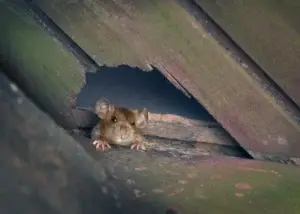

The first real cold front of the year does something to every mouse around Crockett, Grapeland and Lovelady. They stop living out in the pasture grass and the brush piles and start looking for somewhere warm, dry and close to food. Too often, that’s your house, your garage or the feed room in your barn.
Here’s the part most people don’t expect: by the time you actually see a mouse run across the kitchen floor, they’ve usually been there a while. Mice in the winter do most of their damage out of sight, in the walls, the attic and the places you only open once a month. This guide covers what that damage looks like, how to check for it now, where mice get into country homes, and what you can do about it yourself.
Why mice move in when the weather turns
Mice don’t hibernate. They stay active all winter, and they need three things to get through it: warmth, shelter and a steady supply of food. A house gives them all three. So does a barn with a sack of feed in it, a shop full of stored boxes, or a camper that sits all season.
In East Texas the move indoors tends to start with the first cold nights of fall and keeps going through the winter. A rural property makes it easier for them. Hay fields, fence rows, woodpiles and brush along the tree line all hold mice through the warm months, and when it gets cold, the nearest building with a gap in it is the obvious next stop.
The damage that starts before you see a mouse
A mouse needs only a small opening to get in, and once it’s inside it settles in the quiet places: inside walls, under cabinets, behind the stove and dishwasher, in attic insulation and in stored boxes. That’s where the real cost of mice in the winter builds up.
- Chewed wiring. Mice gnaw constantly to keep their teeth worn down. Wires in walls and attics are a common target, and you won’t know until something stops working.
- Ruined insulation. Nesting mice tunnel through attic insulation and soil it with droppings and urine. Insulation in that state isn’t doing its job and usually has to be removed, not just cleaned.
- Spoiled food and feed. Pantry goods, pet food, birdseed and livestock feed get chewed open and contaminated. In a feed room, the waste adds up over a winter.
- Stored belongings. Holiday decorations, clothes, papers and furniture in the attic, garage or shop make good nesting material.
- Health concerns. Mouse droppings, urine and nests can carry germs. That’s why cleanup matters as much as getting rid of the mice (more on that below).
Mice also breed quickly. A couple of mice that slip in during November can turn into a much bigger problem by spring if nothing is done.
Signs of mice to check for this week
You don’t need to see a live mouse to know you have them. Take twenty minutes and look in these places:
- Droppings. Small, dark, about the size of a grain of rice, usually along walls, in cabinet corners, under the sink, in drawers and around the pantry.
- Gnaw marks. Small chew marks on food packages, cabinet edges, baseboards, wiring or feed sacks.
- Nests. Balls of shredded paper, fabric, insulation or grass tucked in a quiet corner, a drawer or a stored box.
- Noises at night. Scratching or light scurrying in the walls or ceiling after the house goes quiet.
- Grease marks. Dark smudges along baseboards or around holes where mice run the same path every night.
- A musty smell in a closet, cabinet or corner of the garage that wasn’t there before.
- Pets acting interested in one spot under the fridge or behind the stove.
Check the barn, shop and feed room too. Look for chewed sacks, droppings on shelves and spilled feed that’s been picked through.
Not sure whether it’s mice, rats or something bigger in the attic? Our rodent ID guide shows the differences.
Where mice get into country homes
Every house is different, but these are the gaps we look at first on homes around Houston County:
- Where pipes, wires and the AC line enter the house. The gaps around them are often bigger than they look.
- Foundation vents and crawlspace openings on pier-and-beam homes, especially screens that have rusted or pulled loose.
- Garage doors with worn bottom seals, and side doors that don’t close tight.
- Gaps under exterior doors with no door sweep.
- Roof lines and eaves, where siding meets the roof or soffits have gaps. Mice climb better than people think.
- Dryer vents and old vent openings without covers.
- Additions and patched areas, where old and new construction meet and leave a seam.
In barns and shops, the openings are usually obvious: gaps under doors, open eaves and holes in old siding. The goal there is less about sealing every crack and more about keeping feed and food where mice can’t reach it.
What you can do yourself this weekend
A few hours of work now can make your place a lot less inviting.
- Seal the small gaps you can reach. Pack steel wool or copper mesh into gaps around pipes and wires, then caulk over it. Mice chew through foam and caulk on their own.
- Add door sweeps to exterior doors and replace a worn garage door seal.
- Check the crawlspace vents and repair torn or loose screens.
- Store food in sealed containers. That includes pet food, birdseed and livestock feed. Metal cans with tight lids work well in a feed room.
- Move the firewood. Stack it off the ground and away from the house, and only bring in what you’ll burn that day.
- Clear clutter against the outside walls: brush, old lumber, stacked pots and equipment.
- Trim branches and vines that touch the roof or siding.
- Set snap traps along walls where you’ve seen droppings, out of reach of kids and pets.
If you find droppings or a nest, don’t sweep or vacuum them dry. The CDC’s advice is to wear rubber or plastic gloves, soak the droppings and nest with a disinfectant or a bleach-and-water mix, let it sit, then wipe it up with paper towels. Their full steps are on the CDC rodent clean-up page.
When to call for an inspection
DIY work helps, but it has limits. Call us if:
- You keep finding fresh droppings after a week or two of trapping.
- You hear activity in the walls or attic that you can’t get to.
- You’ve found droppings or nests in the attic insulation.
- You can’t find where they’re getting in.
- You have mice in more than one building, like the house and the barn.
When we come out, we start with an inspection, not a treatment. We walk the outside of the house, check the crawlspace, attic and entry points, and look at the barn or shop if that’s part of the problem. Then we explain what we found and what we recommend. For mice, that usually means a mix of sealing the entry points, trapping the ones already inside, and cleaning up where they’ve been. You can read more about how that works on our rodent control page, or see our rodent control service in Crockett.
Inspections are free, we can usually get you on the schedule the same week, and we’ll give you a price after we’ve seen the property. We serve homes and farms across Houston County, including Crockett, Grapeland, Lovelady, Latexo and Kennard, as well as Palestine.
Frequently asked questions
Do mice leave on their own when it warms up?
Not usually. Once mice have food, water and a nest inside, they have no reason to leave. Some activity may move back outdoors in spring, but the ones nesting in your walls or attic tend to stay and keep breeding.
If I see one mouse, are there more?
Often, yes. Mice are good at staying hidden, so one you see usually means others you haven’t. Check for droppings in a few different spots to get a sense of how widespread it is.
Are mice in the barn a problem for the house?
They can be. A barn or feed room full of mice keeps the population high right next to your home, and some of them will find their way inside. Protecting the feed and sealing the house work best together.
Do plug-in repellers or peppermint oil keep mice away?
We don’t rely on them. Sealing entry points, removing food sources and trapping are what make the difference.
Hearing scratching in the walls or finding droppings in the pantry? Call Critter Gitters at 936-261-7965 to schedule a free inspection before the mice settle in for the winter.