Copperhead and rattlesnake removal in East Texas requires trained professionals who safely handle venomous species among Texas’s 115-plus snake types, only four groups of which pose danger. Critter Gitters Pest Control removes snakes and installs barrier f
Key Takeaways
- Texas hosts over 115 snake species, with copperheads and rattlesnakes among the most common venomous varieties.
- Critter Gitters Pest Control provides safe professional removal ensuring protection for your family, pets, and the snakes.
- Snake barrier fencing prevents unwanted snakes from entering your East Texas property through proven exclusion methods.
- Our standard removal service includes no surprise fees or upsells—transparent pricing for every job we complete.
Why Are More Snakes Showing Up in East Texas?
Warmer weather, dense brush, and abundant rodent prey draw snakes onto East Texas properties every spring and summer. Your yard, barn, or woodpile looks like prime real estate to a snake hunting food or shelter. Ignore the signs, and you risk a surprise encounter with a venomous species near your porch, garden, or livestock pens.
Texas hosts more than 115 snake species and subspecies, a higher count than any other state in the country. That diversity means East Texas properties sit in genuinely snake-rich territory, not just occasional pass-through country. Most of these species pose no threat to you or your pets. Only four groups carry venom: rattlesnakes, copperheads, cottonmouths (also called water moccasins), and coral snakes.
Which venomous snakes should East Texas homeowners worry about most?
Copperhead snake removal East Texas requests rank among the most common calls received across the region, since copperheads blend into leaf litter and wood piles near homes. Landowners near Palestine also report frequent sightings tied to rocky terrain and dense underbrush, driving steady demand for rattlesnake control Palestine TX services. Cottonmouths tend to stick near water sources, while coral snakes stay reclusive but still warrant caution.
A trained inspection catches what a quick walk-through misses. Critter Gitters has served East Texas homeowners with science-based pest solutions for years. Every snake call starts with a full property inspection before any treatment plan gets set. That diagnosis-first approach identifies entry points, food sources, and shelter spots driving activity on your land. The groundwork for lasting prevention, not a one-time fix.
How Is Copperhead Snake Removal Handled in East Texas?
Certified pest management professionals handle copperhead snake removal east texas properties through careful identification, safe capture, and habitat correction — not guesswork. Skip this process and you risk a repeat encounter within days, since copperheads return to reliable food and shelter sources. A trained technician changes that outcome for good.
Identification comes first. You’ll want a trained eye confirming the species before any action happens. Copperheads carry chestnut or reddish-brown crossbands set against a lighter-colored body. In eastern Texas, the Southern Copperhead is the variety you’ll most likely encounter, typically running 20 to 30 inches long. Mistaking a harmless snake for a venomous one — or vice versa — wastes time and puts your family at unnecessary risk.
At Critter Gitters, technicians aren’t a general maintenance crew. They’re certified pest management professionals trained specifically to protect your home, health, and peace of mind. The team operates under Joey Baker, an Associate Certified Entomologist, whose science-based approach guides every removal job on the property.
What Makes Copperhead Removal Different From General Pest Control?
Snake work demands precision handling and habitat analysis, not just a quick spray-and-go treatment. Copperheads hide in woodpiles, rock beds, and dense ground cover, so removal means locating and eliminating those harborage points too.
Will Copperheads Come Back After Removal?
They can, if the property still offers food and shelter. That’s why lasting results depend on combining eco-conscious treatment methods with advanced technician training rather than a one-time fix.
Expect the process to include:
- On-site inspection to confirm species and locate entry or harborage points
- Safe removal using techniques suited to venomous species
- Habitat correction targeting woodpiles, brush, and ground clutter
- Follow-up guidance to prevent repeat activity around your home
That combination — scientific precision paired with eco-conscious practice — delivers results that last, not treatments you’ll need to repeat next season.
What Does Rattlesnake Control Involve in Palestine, TX?
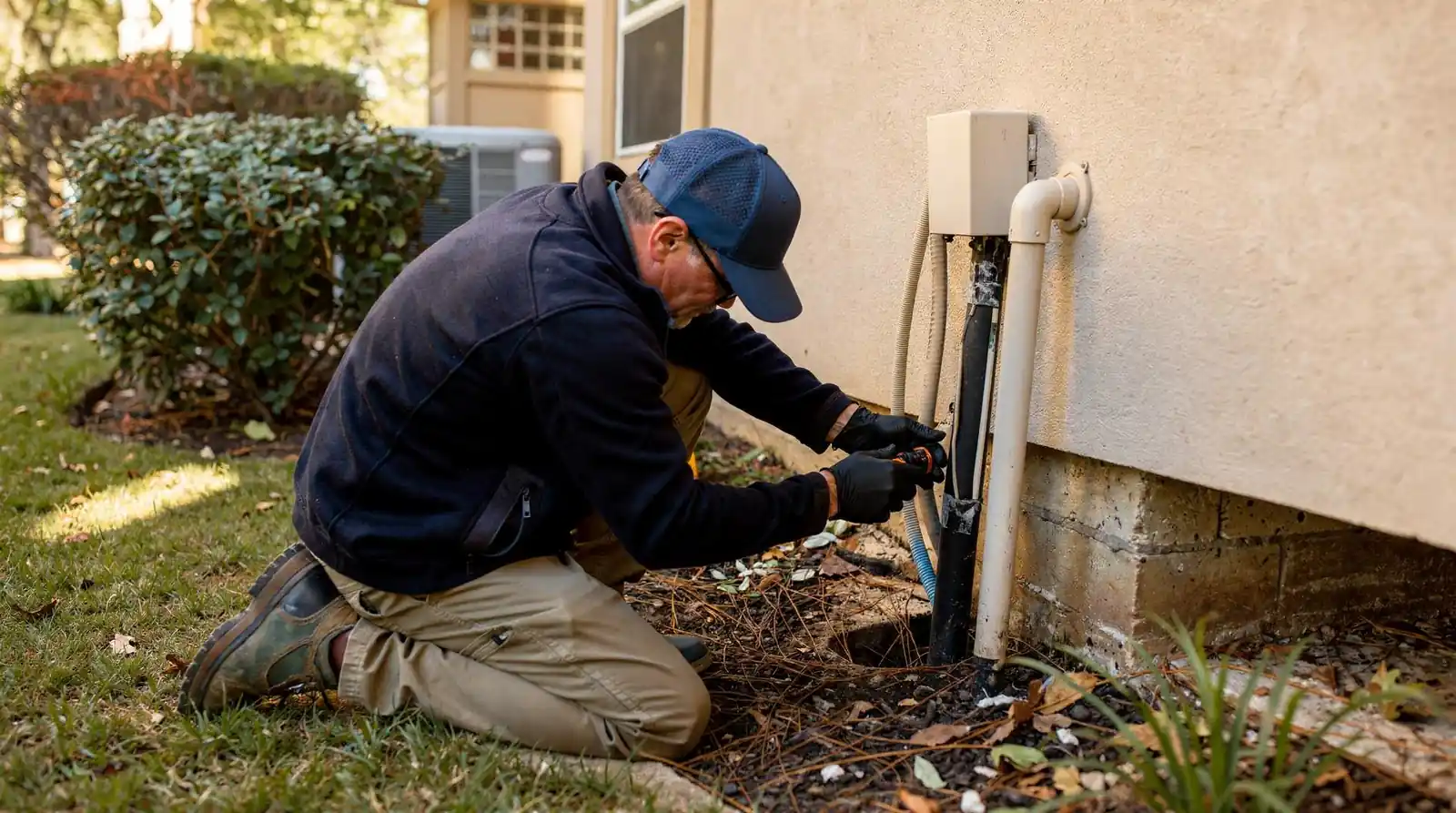
Rattlesnake management in Palestine starts with inspecting the property, not spraying blind. Trained technicians identify entry points, food sources, and hiding spots before recommending a course of action. Skipping this step invites repeat encounters and leaves your family guessing about hidden risk around the yard, barn, or woodpile.
Critter Gitters provides pest control service coverage in Palestine, TX, along with the surrounding East Texas communities. The company’s approach traces back to its founding philosophy: understanding a pest problem before treating it. That means a technician walks your property, notes where rattlesnakes are likely denning, and builds a plan around your specific land. Not a one-size-fits-all treatment.
Why does expertise matter for snake calls?
Snakes aren’t like ants or roaches; misidentifying a species or mishandling a removal creates real danger. Copperhead snake removal east texas homeowners request differs from rattlesnake work, since behavior, habitat, and risk levels vary by species. Trained expertise is what turns a stressful encounter into a controlled resolution. The company frames its trained expertise as the direct source of customer peace of mind.
Is snake removal regulated in Texas?
Yes. Professional snake removal work across Texas follows Texas Parks & Wildlife regulations on every job. That protects native species and keeps property owners on the right side of the law.
Beyond one-time visits, property owners often ask about prevention. Options worth discussing include:
- Habitat cleanup around woodpiles, brush, and foundations
- Sealing gaps under decks, sheds, and crawl spaces
- Snake barrier fence installation around high-traffic yard areas
- Ongoing monitoring for rattlesnake control Palestine TX properties near wooded or rural land
For urgent situations, emergency snake removal Crockett TX callers can expect the same inspection-first, regulation-compliant standard applied statewide.
When Should You Call for Emergency Snake Removal in Crockett?
A venomous snake inside your home, garage, or barn is always an emergency. Call for professional help immediately rather than attempting removal yourself. Waiting even a short time raises the risk of a bite to you, your kids, or your livestock. Located right in Crockett, Texas, your local pest control team sits close to rural properties throughout the area, which means emergency snake removal Crockett TX requests get a fast response instead of a long wait.
That local presence matters more than you might think. Homeowners across the region have direct access to pest control service without relying on a distant, out-of-town outfit that can’t get there quickly. A snake sighting near your barn at dusk or a rattle under your porch steps deserves a technician who already knows the terrain.
What counts as a true snake emergency?
Any snake found inside a living space, near small children or pets, or displaying defensive behavior like coiling and rattling qualifies as urgent. Copperhead snake removal East Texas calls and rattlesnake control Palestine TX requests both fall into this category, since these species deliver a painful, medically serious bite.
Should you try to remove or kill the snake yourself?
No. Most bites happen when people attempt to handle or kill a snake themselves. Every call starts with careful inspection and diagnosis, not a rushed grab-and-go fix. The situation gets assessed properly before action is taken.
Trained technicians remove snakes while protecting your family, your pets, and the snake itself. For property owners who want fewer emergencies going forward, snake barrier fence installation adds a long-term layer of protection around the areas that matter most.
Can Snake Barrier Fencing Really Protect Your Property?
Physical barriers work, but only as one piece of a larger strategy. Snake barrier fence installation blocks entry points, yet fencing alone won’t solve a yard that still offers food and shelter to reptiles. Your best results come from pairing a barrier with habitat changes that make your East Texas property less inviting in the first place.
Effective snake management on your land depends on three connected tactics: habitat modification, strategic landscaping, and targeted deterrents. Used together, these steps significantly cut down on unwanted encounters near your home, barn, or pasture.
- Clear brush piles, tall grass, and woodpiles away from foundations and walkways
- Seal gaps under sheds, decks, and crawl spaces where snakes hide
- Store firewood and equipment off the ground and away from structures
- Install fencing with a fine enough mesh to block small rattlesnakes and copperheads
Do I still need pest control if I install a snake fence?
Yes. Rodents draw snakes onto rural properties, so an unmanaged rodent population undermines even the best fencing. Removing food sources, closing off hiding spots, and combining barriers with rodent control reduces the odds of a snake finding your property attractive at all.
When you partner with certified professionals who understand East Texas terrain, you get more than a one-time fence installation. Eco-conscious methods paired with advanced training aim to deliver lasting protection, not a quick fix you’ll need to repeat next season.
FAQ
Why are snakes increasingly showing up on East Texas properties?
Warmer weather, dense brush, and abundant rodent prey draw snakes onto East Texas properties every spring and summer, making yards, barns, and woodpiles attractive to snakes hunting food or shelter.
Which venomous snakes pose the biggest concern in East Texas?
Rattlesnakes, copperheads, cottonmouths, and coral snakes are the four venomous groups found in Texas. Copperheads generate frequent removal calls, while rattlesnake sightings are common near rocky terrain and dense underbrush.
How does Critter Gitters approach copperhead removal?
Certified pest management professionals handle removal through careful identification, safe capture, and habitat correction, starting every call with a full property inspection to identify entry points, food sources, and shelter spots.
Conclusion
In closing, protecting your East Texas property from copperheads, rattlesnakes, and other wildlife threats requires a combination of professional removal expertise and long-term prevention strategies. Critter Gitters Pest Control delivers both through certified specialists trained in safe handling, humane removal, and effective barrier installation. By addressing immediate concerns and implementing structural safeguards, you gain the peace of mind that comes with a genuinely protected home—backed by our commitment to your family’s safety and satisfaction.