You can handle a lot of small pest problems yourself: a few ants on the kitchen counter, mosquitoes breeding in buckets and gutters around your own yard, or a fire ant mound or two in a town lot. Call a professional when the problem keeps coming back after you’ve treated it, when it’s inside the walls or under the house, when it could hurt someone, or when it might be termites. Termites are the one job we’d tell any East Texas homeowner not to try on their own.
Here’s how to tell which side of that line your problem is on.
Which pest jobs you can handle yourself
A lot of pest control is housekeeping. If the problem is small, you can see all of it, and you can fix what’s drawing it in, doing it yourself often works:
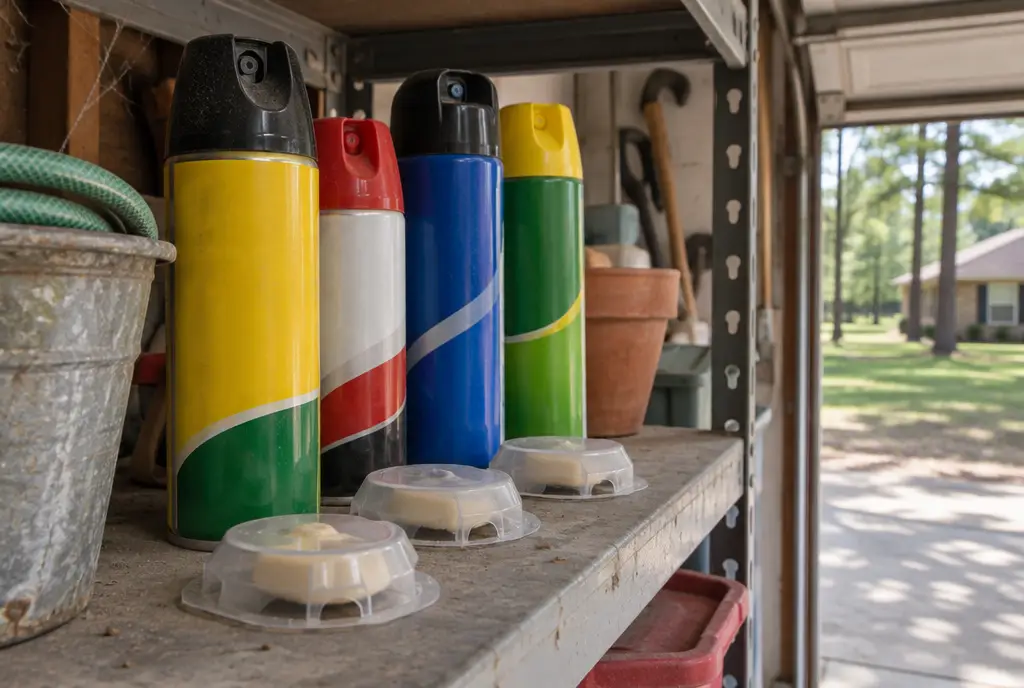
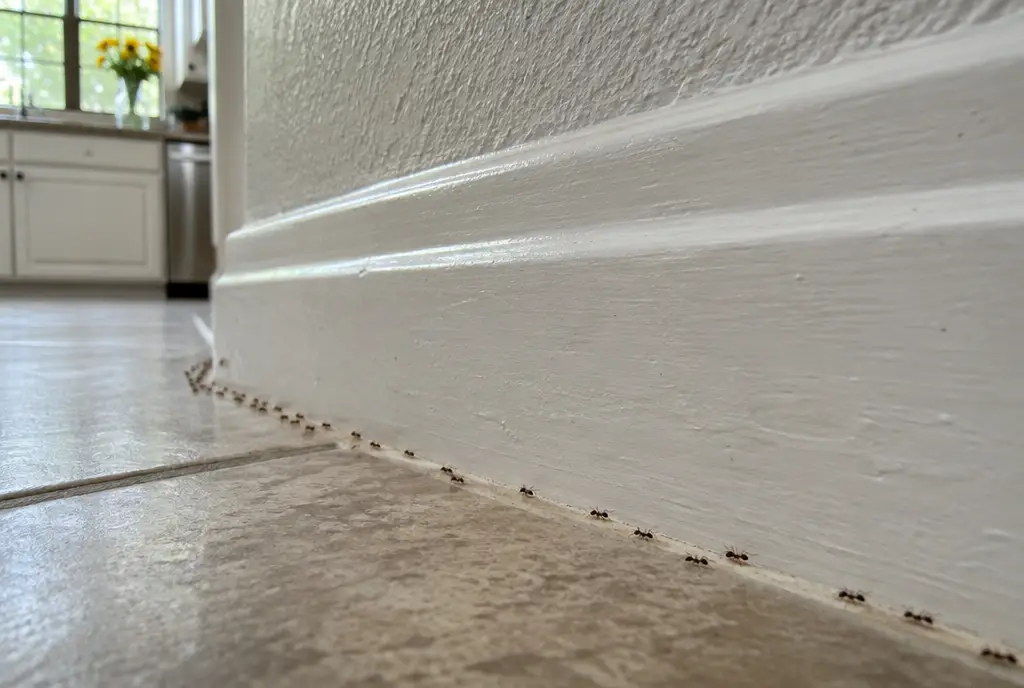
- A few ants in the kitchen. Wipe up crumbs and spills, keep food in sealed containers, and put a store-bought ant bait near the trail. Ants carry bait back to the nest, which does more than spraying the ones you can see.
- Mosquitoes breeding in your own yard. Dump water from buckets, plant saucers, tarps and toys every week, and clean the gutters. Our post on why yards fill with mosquitoes after rain lists the spots people miss.
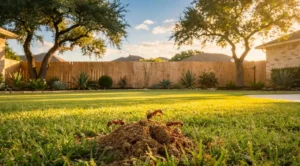
- A fire ant mound or two. A fire ant bait labeled for lawns, spread when the ground is dry and no rain is expected, can handle a small problem. Here’s how to spot a fire ant mound while it’s still small.
- Keeping pests out. Sealing gaps around pipes and doors, trimming branches off the roof, and storing pet food, feed and birdseed in sealed bins all help, whether you treat yourself or not.
The common thread: the problem is small, it’s easy to reach, and you can take away what’s attracting it. Always read and follow the product label. If you’re not sure you have a real pest problem yet, start with our list of signs it’s time to call for pest control.
Where store-bought treatments fall short in East Texas
Store products aren’t useless. The trouble is usually where the pests are, not what’s in the can.
- Spraying what you can see. Most of a colony or nest is out of sight, in a wall, under a slab or underground. A spray kills the ants on the counter, not the ones feeding the queen, and the colony carries on.
- The wrong product for the pest. Ants, roaches, spiders and rodents each need a different approach, and a general bug spray isn’t the right tool for most of them. Getting the identification right comes first.
- Pests that come from next door. On a wooded lot, near a creek bottom or next to pasture, new pests move in from land you don’t control. One treatment in your yard doesn’t change that.
- The season. Each season brings different pests, so a one-time spray rarely lasts. Rain also keeps bringing mosquitoes and fire ant mounds back.
One customer review on our home pest control page tells exactly this story. The homeowner sprayed pesticide on ants trailing out of a wall, and Joey explained that it was better to let them trail, because spraying sends them back in to start another colony. They also turned out to be carpenter ants, not the termites the homeowner first suspected. That’s the other lesson: know what you’re treating before you treat it.
Termites: the job not to DIY
If you think you have termites, skip the hardware store. Subterranean termites live in the soil and travel into the house through mud tubes and hidden wood, so by the time you see damage, they’ve usually been at it for a while. Spraying the wood you can see doesn’t reach the colony, and it doesn’t tell you where they’re getting in.
Signs worth a call:
- Mud tubes on the foundation, piers or walls.
- Discarded wings near windows or doors after a swarm.
- Wood that sounds hollow or crumbles.
Professional termite treatment works on the colony or on the soil around the whole foundation, not just the boards you can reach. Critter Gitters offers both Sentricon bait stations and Termidor treatments, and owner Joey Baker is a Certified Sentricon Always Active Specialist. Our post on Sentricon vs liquid termite barriers explains how each one works, and our termite control page covers what we do. Buying or selling a house? We also provide termite inspections and WDO reports for real estate.
What a professional visit does differently
The biggest difference isn’t the spray. It’s the inspection that comes before it.
- It starts with a free inspection. A licensed technician (TPCL #13381) looks inside and out for the pest, how it’s getting in and what’s drawing it, so the treatment fits your house.
- You get the price after the inspection. Nobody quotes a problem they haven’t seen.
- Treatment goes where the pests are. Our quarterly plans treat inside and out every 3 months, with crack-and-crevice and perimeter work, plus web and wasp nest removal up to 15 ft.
- Someone comes back. On a recurring plan, if covered pests return between visits, we re-service at no charge.
- One-time help is available. If you only need one treatment, we can do that. It just takes a short service agreement.
Scheduling is usually the same week, and monthly payments are available. Our treatments are eco-friendly and pet friendly. Keep pets off treated areas until the product dries.
Critter Gitters was founded in Crockett in 2006 and serves Houston County and nearby East Texas towns. Check our service area, or call 936-261-7965 for a free inspection.
Quick answers
Is DIY pest control cheaper than a professional?
Up front, usually. A store product costs less than a service visit. But if the pests keep coming back, the repeat purchases add up, and termites left untreated keep doing damage. With us, you get the price after a free inspection, so you know before any work starts.
Can I get one professional treatment and handle it from there?
Yes. One-time treatments are available with a short service agreement. For pests that return with the seasons, a recurring plan comes with free re-service between visits.
Should I ever treat termites myself?
No. Termites work out of sight, and spraying the wood you can see doesn’t reach the colony. Book an inspection instead.
What should I do before the technician arrives?
Stop spraying, and leave the trail or nest alone. Note where and when you’ve seen the pests, and save a dead one in a sealed bag if you can. It helps with identification.