When it comes to armadillo trapping service the woodlands tx, armadillo damage in Montgomery County yards stops when you eliminate grubs and cover simultaneously: clear brush, woodpiles, and low shrubs while treating soil for the larvae armadillos hunt. Humane cage traps placed along fresh burrow paths work best. Critter Gitters Pest Control pairs targeted grub control with exclusion methods. Critter Gitters Pest Control proudly serves East Texas & Houston County without harming these nocturnal diggers.
Key Takeaways
- Armadillos dig for underground grubs and insects; reducing lawn pests eliminates their primary food source.
- Remove brush piles, woodpiles, and low-lying vegetation to eliminate the shelter armadillos seek in yards.
- Humane trapping relocates armadillos safely without harming these native Texas wildlife creatures permanently.
- Armadillos tunnel up to 15 feet long; professional removal prevents extensive yard and foundation damage.
Why Are Armadillos Digging Up Your Yard?
Grubs buried beneath your Texas lawn are the main draw for armadillos tearing up your grass. According to the Lady Bird Johnson Wildflower Center, armadillos actively seek out these grubs as a food source, which explains why your yard becomes a target seemingly overnight. Your soil conditions matter too — moist, grub-rich lawns across Montgomery County give armadillos exactly what they’re hunting for.
Food isn’t the only motivation, though. Armadillos also wander onto your property searching for shelter, not just a meal. That means your yard might be attractive for two reasons at once: a buffet underground and a safe place to burrow nearby.
What Yard Conditions Attract Armadillos in Texas?
Lawns with heavy grub populations, loose soil, and nearby cover like brush piles or dense shrubs create ideal armadillo habitat. If your property in The Woodlands or Conroe backs up to wooded areas, you’re at higher risk simply because shelter and food sit close together.
Here’s what typically draws armadillos onto your property:
- Grub-infested soil near the surface
- Loose, easily excavated dirt
- Brush piles or overgrown landscaping for cover
- Consistent moisture that keeps grubs active
Does Fixing the Grubs Stop the Digging?
Addressing the grub population helps, but effective grub control for armadillos works best alongside a full inspection. Critter Gitters starts every case by diagnosing what’s actually happening in your soil based on scientific methods. Since 2006, Critter Gitters has protected East Texas homes with science-based solutions built on that same inspect-first approach. A smarter path than chasing damage after the fact.
What Does Armadillo Lawn Damage Look Like?
Small, shallow craters scattered across your grass are the telltale sign. Holes appear small and shallow rather than deep. A Montgomery County yard can end up pocked with dozens of them overnight. You’ll notice the damage most after a rain, when soft, moist soil makes digging easier for hungry armadillos hunting grubs and insects underground.
The destruction isn’t constant — it spikes during active digging. Armadillos tear up turf most aggressively while excavating for food or burrowing out a shelter. A quiet lawn one evening can look like it survived a hailstorm by morning. That unpredictable pattern is part of what makes armadillo lawn damage repair in Conroe such a frequent call for area homeowners.
How Do I Know If Armadillos Are the Cause?
Look for the size and shape of the holes first. Round, shallow pits clustered near flower beds, garden borders, or shaded turf point to armadillos rather than moles or gophers, which leave raised tunnels or mounded dirt instead.
Is the Damage Getting Worse Over Time?
Repeated digging in the same area usually means an active grub population is feeding the problem. Left unaddressed, the holes multiply and can undermine root systems near foundations or patios.
Because armadillos keep returning to a reliable food source, cosmetic fixes rarely work for long. That’s where a trained eye matters. Critter Gitters technicians are certified pest management professionals focused on protecting your home, health, and peace of mind. The team is led by an Associate Certified Entomologist who blends scientific training with hands-on field experience across East Texas properties.
Should You Trap Armadillos Yourself Or Call A Pro?
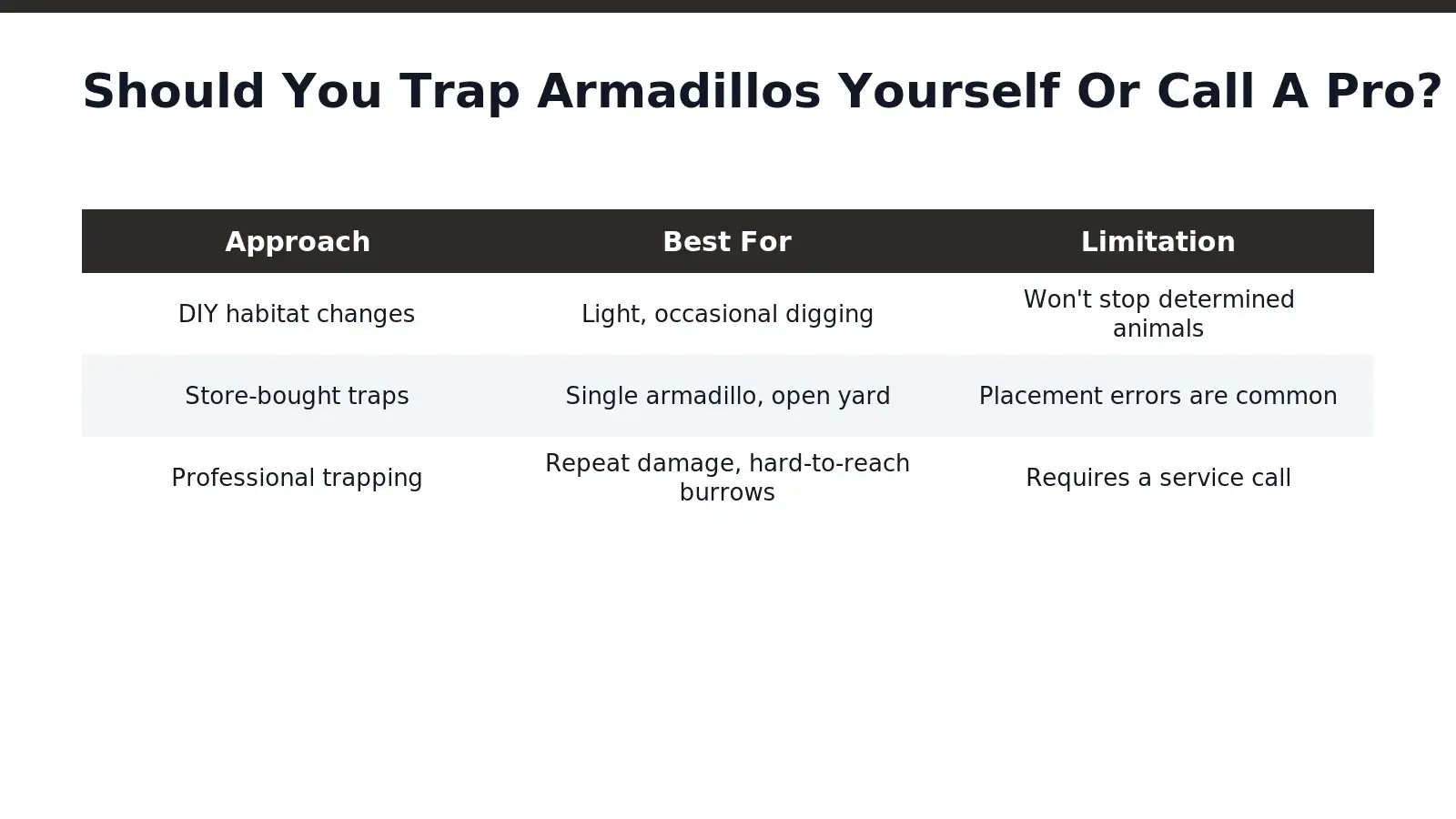
DIY trapping works for a single armadillo with minor digging. Persistent damage across Montgomery County lawns usually calls for professional help. Small burrows near a flowerbed might respond to habitat changes alone. Repeated tunneling under a foundation or patio in Conroe or The Woodlands signals a bigger problem than a store-bought cage can solve.
Start with prevention before deciding on trapping. Clear brush piles, stacked wood, and low-hanging shrubs from your yard’s perimeter. These hiding spots make your property far more attractive for burrowing. Fallen fruit and berries deserve cleanup too. That food source pulls armadillos in from neighboring greenbelts common throughout East Texas.
How do you know when it’s time to call a professional?
Multiple fresh holes appearing overnight, tunnels running under slabs, or repeat visits after you’ve removed cover and food sources all point to a job beyond DIY tools. Critter Gitters offers wildlife removal and exclusion services built specifically for homeowners facing this kind of persistent activity.
Is a professional trapping service worth it for one armadillo?
One animal rarely justifies a full service call. Montgomery County properties near wooded lots or creek beds often see repeat visitors. An **armadillo trapping service in The Woodlands, TX** brings the right equipment and placement knowledge to break that cycle fast.
Working from Crockett, Texas, Critter Gitters brings direct familiarity with the wildlife pressure East Texas properties face year-round. That regional experience, paired with recognized industry credentials, means trapping decisions get backed by real expertise rather than guesswork.
How Does Grub Control Stop The Digging?
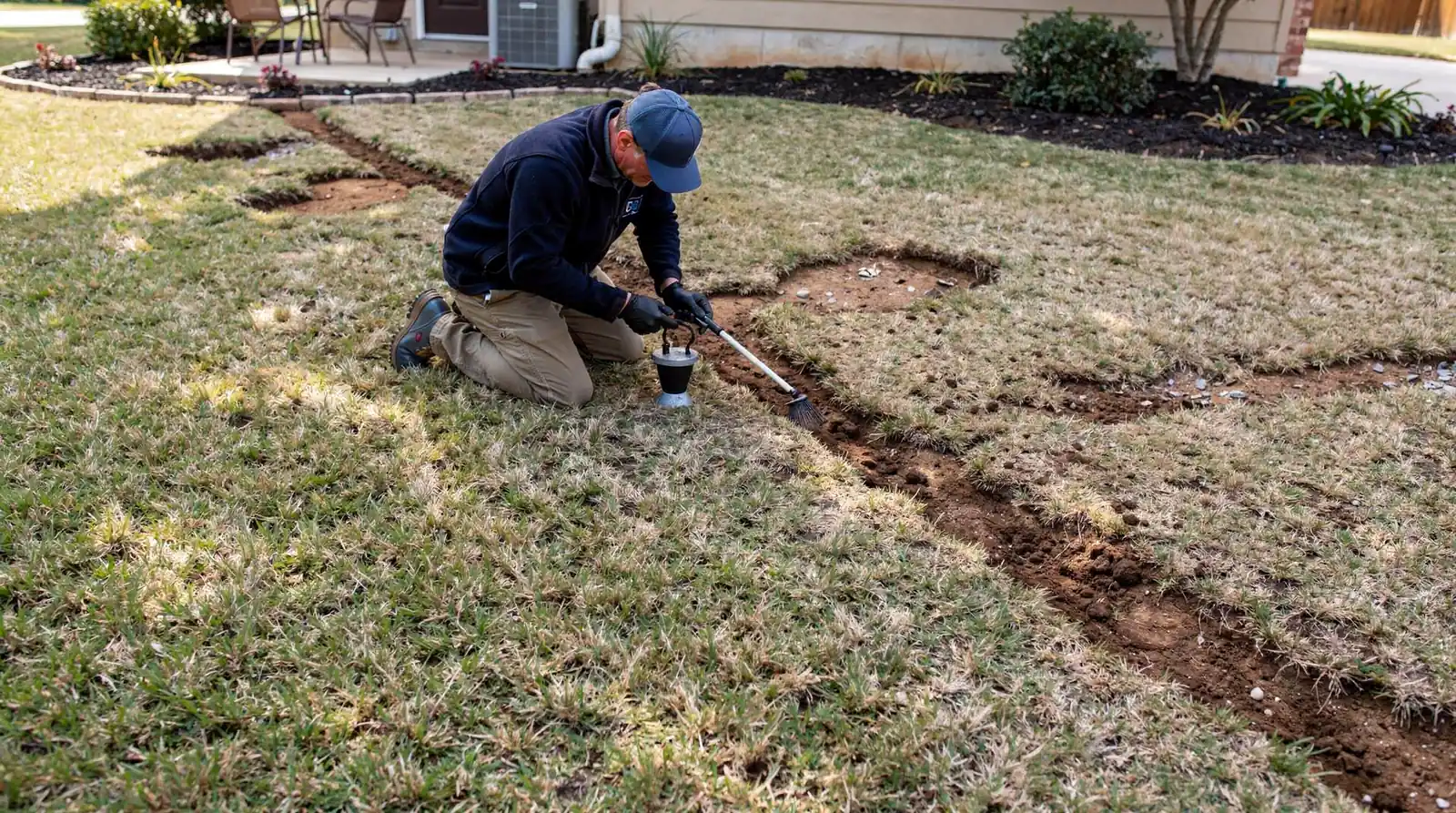
Grub control removes the food source driving armadillos to tear up Texas lawns in the first place. Trapping alone treats the symptom. Grub control for armadillos treats the cause. That distinction matters for homeowners across Montgomery County who keep patching the same holes every week.
Stopping lawn destruction takes a two-step approach, not a single fix. First, the grub population underground needs treatment. Second, the yard needs monitoring so new grubs don’t repopulate the soil and pull armadillos right back in. Skipping either step means you’re likely to see fresh digging within weeks.
Removing attractants sounds simple, but it rarely works alone. Because most of an armadillo’s diet lives below the surface, you can clear brushpiles and trim shrubs all season and still have a yard full of grubs calling them in. That’s why how to get rid of armadillos east texas homeowners trust starts with soil treatment, not just yard cleanup.
Will Grub Control Alone Keep Armadillos Away?
Not by itself. Grub treatment cuts off the food supply, but shelter and cover still draw armadillos looking for a place to burrow. Pairing grub control with habitat reduction gives you a far stronger, longer-lasting result than either step alone.
A complete program builds on that foundation:
- Targeted grub treatment to eliminate the underground food source
- Ongoing lawn fertilization and weed control to strengthen turf health
- Ongoing monitoring to catch new grub activity before damage returns
Critter Gitters combines scientific precision, advanced training, and eco-conscious practices to deliver results built to last, not treatments you repeat every season. For homeowners weighing an armadillo lawn damage repair conroe project against ongoing prevention, addressing the grubs first protects the investment you’re about to make in your yard.
How Do You Repair Damage And Prevent Return Visits?
Repairing torn-up turf starts with filling burrows and reseeding bare patches, but lasting protection means eliminating the food source underground. Montgomery County lawns sit on soil rich in grubs and earthworms, which is exactly why armadillos keep digging up flower beds and St. Augustine grass across The Woodlands, Conroe, and surrounding neighborhoods. Skip the grub treatment, and you’ll patch the same holes again next month.
Critter Gitters has served homeowners in Crockett, Texas, with science-based solutions since 2006, shaping how repair and prevention work together. Rather than a one-time patch job, technicians follow a consistent inspect-plan-control-follow-up process built for reliable, year-round results. That means identifying entry points, treating the grub population feeding the armadillos, and scheduling a return visit to confirm the yard stays undisturbed.
Does Killing Grubs Actually Stop Armadillo Damage?
Yes — removing the food supply is the most effective long-term fix. Grub control for armadillos targets the larvae living in soil. Root systems, cutting off what draws armadillos onto the property in the first place. Paired with trapping, this approach addresses both the immediate damage and the reason armadillos returned.
What If Armadillos Keep Coming Back?
Repeat visits usually signal an untreated grub population or a nearby burrow site. Technicians trained in how to get rid of armadillos east texas conditions reassess the yard and adjust the plan accordingly.
For scheduling, Critter Gitters keeps weekday office hours from 8am to 5pm, making it simple to book an inspection or follow-up before damage spreads further.
FAQ
Why do armadillos dig up Texas yards?
Armadillos tunnel through lawns hunting grubs buried beneath the soil, their primary food source. Moist, grub-rich lawns across Montgomery County give them exactly what they’re seeking, while nearby shelter adds a second draw.
What yard conditions attract armadillos?
Grub-infested soil, loose easily excavated dirt, and brush piles or overgrown landscaping create ideal habitat. Properties backing up to wooded areas face higher risk since food and shelter sit close together.
How does Critter Gitters stop armadillo damage?
Critter Gitters starts with a full inspection to diagnose soil conditions, then pairs targeted grub control with exclusion methods and humane cage traps placed along fresh burrow paths, all without harming the armadillos.
Conclusion
In closing, armadillo damage doesn’t have to be a permanent fixture in your Texas yard. By combining humane trapping with targeted grub control, you address both the immediate problem and the underlying food source that attracts these persistent diggers. A comprehensive approach—removing the animals and eliminating their reason to return—delivers lasting results and restores your lawn’s health. When DIY efforts fall short, professional expertise ensures the job is done right the first time, giving you back the yard you deserve.