Powderpost beetles rank second only to termites in destroying dry, seasoned wood, making pier-and-beam supports especially vulnerable. Critter Gitters Pest Control inspects Crockett-area historic homes for active infestation signs, then treats and preserves original beams to protect structural integrity for years to come.
Historic pier-and-beam homes across East Texas face serious risk from powderpost beetles, insects second only to termites in destroying dry, seasoned wood. Critter Gitters Pest Control, family-owned since 2006, inspects exposed beams and joists, identifies active infestations, and applies targeted treatments protecting structural integrity while preserving original craftsmanship families have maintained for generations.
Key Takeaways
- Powderpost beetles rank second only to termites in damaging seasoned wood used in historic structures.
- Lyctus beetles represent the most common powderpost beetle species affecting Indiana and similar climates.
- Proper treatment requires identifying the specific beetle species to apply effective control measures accurately.
- Historic pier-and-beam homes need immediate professional inspection when powderpost beetle damage appears to prevent structural compromise.
What Makes Powderpost Beetles a Threat to Historic Homes?
Powderpost beetles rank second only to termites in their capacity to destroy dry, seasoned wood, according to University of Kentucky Entomology. That fact alone should concern anyone caring for a historic pier-and-beam home, where exposed joists, sills, and structural timber sit fully accessible underneath the house. You lose more than lumber when these insects settle in — you lose the structural integrity that keeps a century-old foundation sound.
Historic home insect damage in Crockett properties often traces back to this exact vulnerability. Pier-and-beam construction leaves seasoned wood open to the air, and that dry timber is precisely what powderpost beetles prefer.
How do you know if the infestation is still active?
Determining whether damage reflects a current infestation or old, dormant activity takes careful evaluation, not a quick glance. Fresh powdery frass, clean exit holes, and structural softness signal ongoing feeding, while dusty, weathered holes may point to a problem from years past. Guessing wrong means either treating unnecessarily or missing real damage in progress.
Why do homeowners get conflicting answers about beetle damage?
Identifying an active infestation confuses homeowners, wood suppliers, builders, and even pest control companies themselves. Damage patterns from wood-boring insects often overlap, making a trained eye essential for pier-and-beam properties.
For powderpost beetle treatment Texas homeowners can trust, professional assessment matters most when timber has stood exposed for decades:
- Check exposed pier-and-beam joists for powdery residue near exit holes.
- Look for structural softness rather than surface cosmetic marks.
- Request an inspection before assuming old damage means an inactive problem.
How Do You Spot Powderpost Beetle Damage in Old Wood?
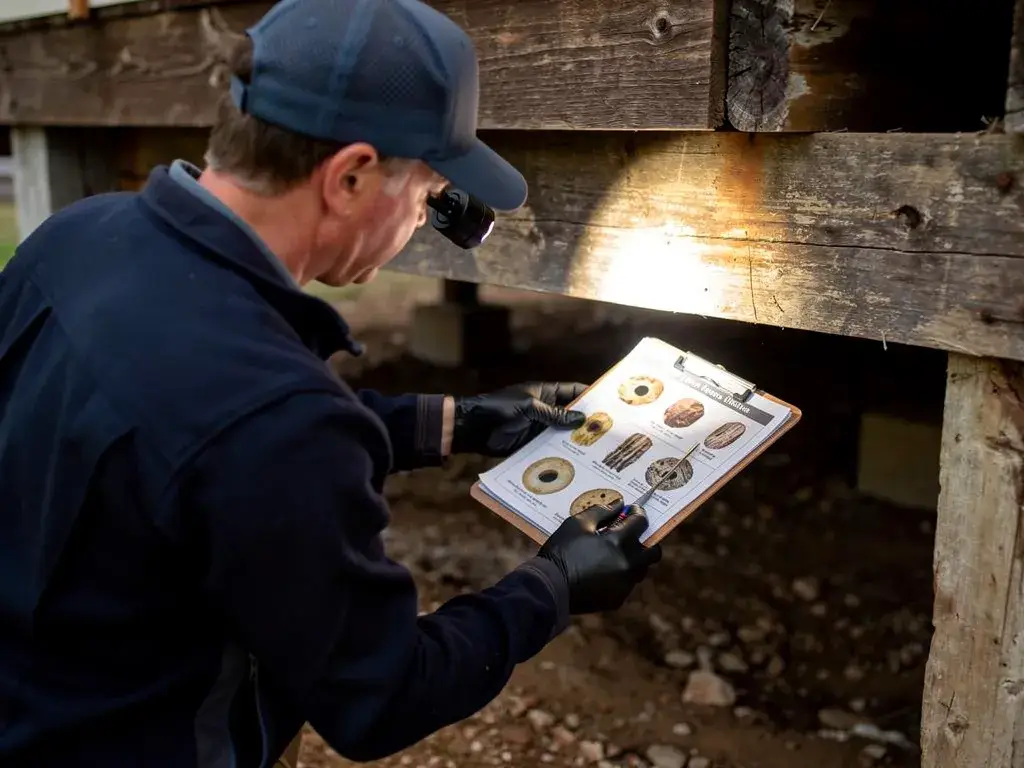
Small, round holes scattered across exposed beams reveal one of the clearest warning signs in a pier-and-beam foundation. Look closely at the framing under your historic pier-and-beam home, since raised wood structures expose more bare lumber to inspection than slab-built houses ever do.
Original framing in these structures typically relies on oak, hickory, ash, and walnut — the exact hardwood species wood boring beetles target most aggressively. If your home dates back several decades, its structural timbers are prime targets because of what they’re made from.
What do the exit holes actually look like?
Shot holes appear small and round, roughly the diameter of pencil lead or a bit larger. They often cluster in groups rather than scattering randomly, which signals a concentrated infestation rather than a single stray insect. Run your hand across old joists and support beams during a crawlspace check — texture changes matter as much as visible holes.
Is powdery residue a bad sign?
Yes, and it’s one of the most reliable indicators available to homeowners. Tap or jar suspect wood gently; if a fine, flour-like powder sifts out, larvae are likely still active inside. Dust with no holes nearby, or holes with no fresh powder, may point to old damage instead.
Watch for these signs during any crawlspace or attic inspection:
- Clustered shot holes across beams, joists, or sill plates
- Fine powder collecting beneath framing after light tapping
- Exit holes left behind once larvae mature into adults
- Soft or crumbling wood texture near visible holes
Left unaddressed, this historic home insect damage in Crockett-area properties compounds quietly for years before structural weakness becomes obvious.
Can a Historic Pier-and-Beam Home Survive an Infestation?
Yes, a historic pier-and-beam home survives an infestation when the damage gets caught early and treated correctly. Professional providers treat wood-destroying insects in historic structures as routine work, not a crisis that ends in demolition. That track record matters for East Texas homeowners nervous about what a beetle problem means for a century-old farmhouse or a downtown storefront. Losing the building isn’t the default outcome — losing time before calling for help is what causes real damage.
Wood boring beetles Palestine TX property owners encounter often start small: a few pinholes, a little dust, nothing alarming. Left alone, that trickle becomes structural erosion in the joists and beams holding the house up.
How do you know it’s an active infestation?
Three signs confirm the problem. You’ll notice powdery dust piling up beneath wood surfaces, numerous small pinholes across beams or trim, and sometimes beetles emerging directly from structural wood. Any one of these signs deserves a professional look before it spreads further.
Can old wood be saved?
Often, yes. Structures well over a century old have been found structurally sound and visually striking, with only isolated beetle damage marring otherwise solid wood. That pattern supports treatment and preservation over tear-out and replacement, especially in homes with irreplaceable original framing.
Historic home insect damage in Crockett-area properties follows the same pattern seen elsewhere: isolated, catchable, treatable. Proper powderpost beetle treatment Texas homeowners can rely on focuses on:
- Confirming activity through dust, pinholes, and beetle sightings
- Targeting infested wood without unnecessary demolition
- Protecting original beams that give historic homes their character
Early action keeps your home’s story intact.
What Does Professional Powderpost Beetle Treatment Involve?
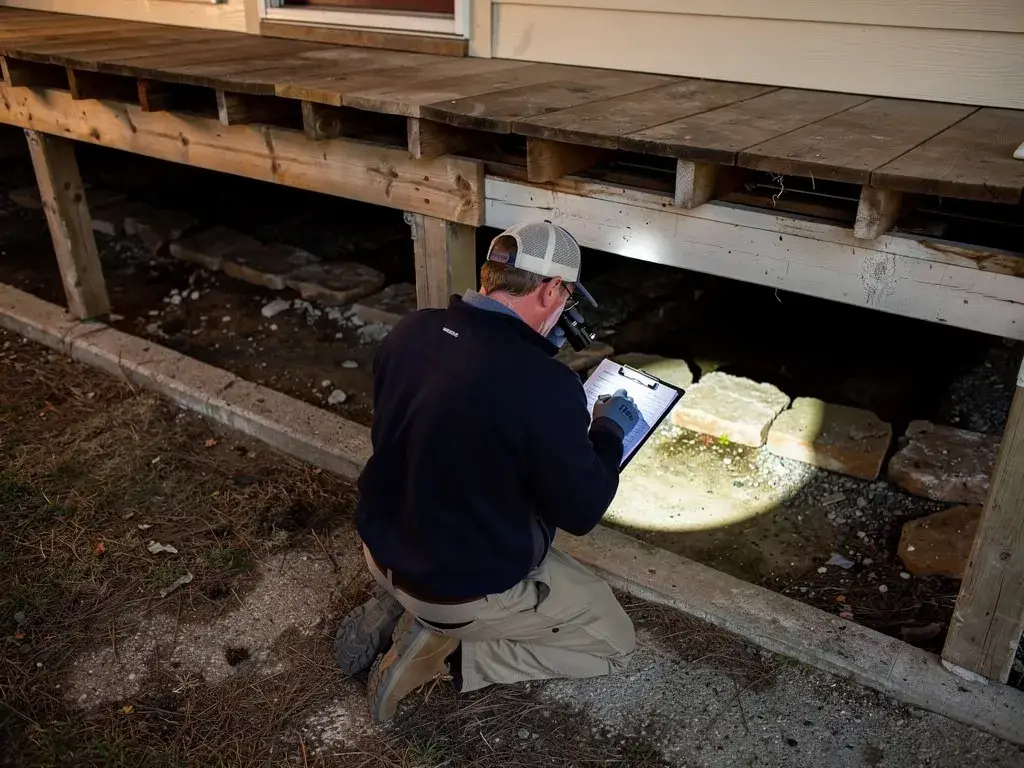
Professional treatment starts with a thorough inspection, not a spray-and-go visit. Your historic pier-and-beam home deserves a diagnosis before any product touches the wood, because the right fix depends on the pest, the wood species, and how far the damage has spread.
Powderpost beetles lay their eggs inside unfinished or untreated wood, which explains why exposed floor joists, sill plates, and crawl-space framing in a pier-and-beam structure attract them so easily. These areas often stay unpainted and unsealed for decades, giving the insects direct access to bare timber. Historic home insect damage in Crockett and surrounding communities frequently traces back to exactly this kind of exposed, untreated wood beneath the house.
How Do You Know It’s Powderpost Beetles and Not Termites?
Powderpost beetle damage gets mistaken for termite activity constantly, and the two require completely different treatment strategies. Beetles leave small round exit holes and fine powdery frass, while termites cause hollowed wood without the same surface holes. Correct identification matters before you spend money on the wrong solution.
A proper powderpost beetle treatment in Texas follows a clear sequence:
- Inspect every accessible beam, joist, and crawl-space timber for exit holes and frass
- Diagnose the specific beetle species and assess how far damage extends
- Treat using methods matched to the wood type and infestation severity
- Follow up to confirm the treatment held
This approach combines scientific precision, advanced training, and eco-conscious practices designed for lasting results. On irreplaceable historic timber, treatments that need repeating aren’t just inconvenient — they risk further structural loss. Wood boring beetles in Palestine, TX homes deserve that same lasting-results standard, not a quick fix that wears off in a season.
How Can Homeowners Protect Historic Homes Long-Term?
Long-term protection for historic pier-and-beam homes starts with routine inspection, not emergency repair. Waiting until you see sagging floors or crumbling beams means the damage already runs deep. Catching wood-boring insects early preserves both the structure and the character that makes these homes worth saving.
Small holes in exposed beams or joists deserve immediate attention. Wood boring beetles target the seasoned lumber common in pier-and-beam construction, and left untreated, they cause serious structural damage to homes, furniture, and hardwoods. That damage rarely announces itself loudly; it spreads quietly beneath floorboards and inside crawl spaces until repairs become costly and invasive.
What Should You Check During a Historic Home Inspection?
Look for fine, powdery frass near baseboards, exit holes the size of a pencil tip, and any soft or crumbling wood near piers. Crawl spaces deserve special attention since moisture and poor ventilation invite infestation. A trained technician can distinguish active activity from old, treated damage.
Why Does Local Experience Matter for Older Homes?
A pest control team serving East Texas since 2006 understands the wood types, humidity patterns, and construction quirks found in older properties across the region. That family-owned background gives homeowners a dependable resource for historic home insect damage prevention, not just reactive treatment.
Protecting a pier-and-beam home long-term means building a maintenance rhythm:
- Schedule annual wood-destroying insect inspections
- Improve crawl space ventilation and moisture control
- Address exit holes or frass immediately, not seasonally
- Keep firewood and lumber away from foundation piers
A provider offering powderpost beetle treatment Texas homeowners trust, based in Crockett and serving communities throughout the surrounding region, brings that consistency to properties that can’t afford guesswork.
FAQ
What makes powderpost beetles dangerous to historic pier-and-beam homes?
Powderpost beetles rank second only to termites in destroying dry, seasoned wood, and pier-and-beam construction leaves joists, sills, and structural timber fully exposed underneath the house, making these homes especially vulnerable to damage.
How do you tell if a powderpost beetle infestation is still active?
Fresh powdery frass, clean exit holes, and structural softness signal ongoing feeding, while dusty, weathered holes often point to old damage rather than a current problem. Careful evaluation, not a quick glance, determines the difference.
Who inspects and treats historic homes for powderpost beetles in Crockett?
Critter Gitters Pest Control, a family-owned company located in Crockett, Texas, inspects exposed beams and joists, identifies active infestations, and applies targeted treatments that protect structural integrity while preserving original craftsmanship.
Conclusion
In closing, protecting your historic pier-and-beam home from powderpost beetles requires prompt inspection, targeted treatment, and ongoing vigilance. Early detection prevents structural damage that compounds over time, while professional intervention stops infestations before they spread. By combining thorough assessment with proven preservation methods, you safeguard both the integrity of your home and the peace of mind your family deserves. Your investment in proactive pest management today ensures your historic property stands strong for generations to come.
Conclusion
In closing, protecting a historic pier-and-beam home from powderpost beetles takes the same care and craftsmanship that built it in the first place. Thoughtful inspection, targeted treatment, and consistent moisture control preserve the structural integrity these homes deserve, without compromising their character. Our certified experts provide safe, effective pest control for your peace of mind, guiding homeowners through every step so these treasured East Texas properties remain sound, protected, and ready to stand for generations to come.