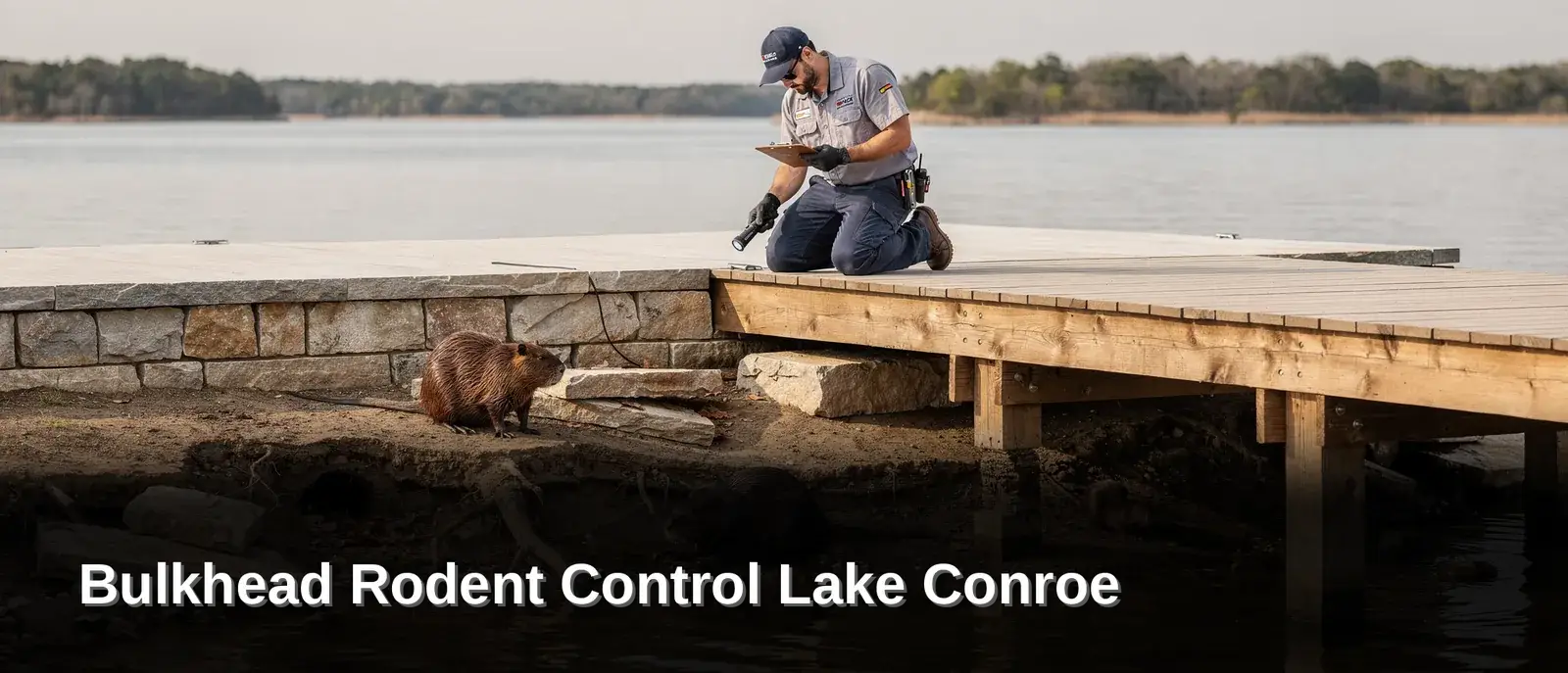
Nutria and muskrats undermine Lake Conroe bulkheads and riprap through burrowing, causing structural collapse. Critter Gitters Pest Control of Crockett, Texas installs galvanized wire mesh barriers, hardware cloth at 1/4-inch spacing, and rock rip-rap reinforcement to block burrow entry points and eliminate erosion pathways along shoreline structures.
Bulkhead and riprap burrows along Lake Conroe shorelines weaken embankments and invite seepage, mirroring risks dam-safety experts warn against. Critter Gitters Pest Control, led by Associate Certified Entomologist Joey Baker, inspects rock and structural gaps, identifies burrowing rodent activity, and applies targeted exclusion methods to protect your Lake Conroe property’s foundation and long-term shoreline stability.
Key Takeaways
- Burrowing rodents like muskrats and groundhogs damage Lake Conroe bulkheads through erosion and structural weakening over time.
- Wood bulkheads require regular inspection and repair to withstand constant water exposure, waves, and fluctuating lake levels.
- Critter Gitters eliminates rodent burrows at the source, preventing further damage to your waterfront property’s foundation.
- Professional rodent control protects bulkheads and riprap from costly structural failure caused by muskrat tunneling and groundhog excavation.
Why Do Burrowing Rodents Threaten Lake Conroe Bulkheads?
Groundhogs, muskrats, and beavers gravitate toward shoreline structures. Their tunneling undermines the wood and stone that hold your property in place. The Association of State Dam Safety notes that these rodents pose real danger to the structural integrity of embankments and similar shoreline barriers. That warning applies directly to lakefront homes here, too. A strong bulkhead ranks among the most critical structural elements protecting any waterfront property. Lake Conroe’s shoreline depends on thousands of these walls to hold soil in place.
Here’s the problem: burrows do their damage where you can’t see it. Groundhog and muskrat tunnels weaken embankments from below, opening pathways for seepage that slowly erodes the ground supporting your bulkhead. Over months, that hidden erosion turns into a leaning wall or a collapsed section of shoreline.
Lake Conroe’s shore is already heavily armored with bulkheads and boat docks, which makes it a prime target for this kind of damage. Most work along the lake today involves repairing, replacing, or extending walls built a generation ago. Structures that are exactly the type rodents favor for burrowing.
What signs indicate rodent damage near a bulkhead?
Watch for small holes or tunnel openings near the waterline, soft or sunken soil behind the wall, and visible gaps where the bulkhead meets the shore. Muddy water pooling after rain, without an obvious cause, often signals a hidden burrow network.
Bulkhead rodent control at Lake Conroe addresses these entry points directly, combined with exclusion work that keeps burrowing wildlife from returning. Critter Gitters travels to Lake Conroe properties from its East Texas base to inspect shoreline structures and stop burrowing damage before it spreads. Catching the problem early protects both your bulkhead and the investment behind it.
How Do Muskrats And Nutria Damage Riprap?
Burrowing rodents tunnel straight through the fill beneath riprap. Bulkheads, hollowing out the very ground that holds your shoreline together. On Lake Conroe, where wood bulkheads already take a beating from waves and shifting lake levels, that hidden digging turns a slow erosion problem into a fast-moving one. You need bulkhead rodent control on Lake Conroe before a small burrow becomes a collapsed wall.
Muskrats favor the soft, saturated soil right along the waterline. Their burrows create hollow channels through embankment fill. Those channels become highways for water to seep deeper into the structure. Over time, seepage pathways like these undermine the packed earth behind your riprap, and rock that once sat solid starts to shift and settle.
Do Nutria Cause The Same Problems As Muskrats?
Yes. **Nutria removal** matters for Montgomery, TX properties for the same structural reasons as muskrat control. Nutria dig similarly aggressive burrow systems. Left alone, that activity hollows out embankments and raises your risk of slides, seepage, and eventual failure.
Why Do Beavers Target Areas Near Spillways?
Beavers chase the sound and feel of moving water. On lake properties near spillways or culverts, beavers attempt to dam or plug that flow, which raises pool levels and adds pressure against nearby bulkheads and riprap.
If you own waterfront in Willis, TX, the combination hits hard:
- Wood bulkheads already weaken from constant wave and water-level exposure
- Rodent tunnels compound that erosion from behind the wall
- Rising pool pressure from beaver activity stresses the whole structure
Waterfront rodent control for Willis, TX properties addresses all three threats before your shoreline investment washes away.
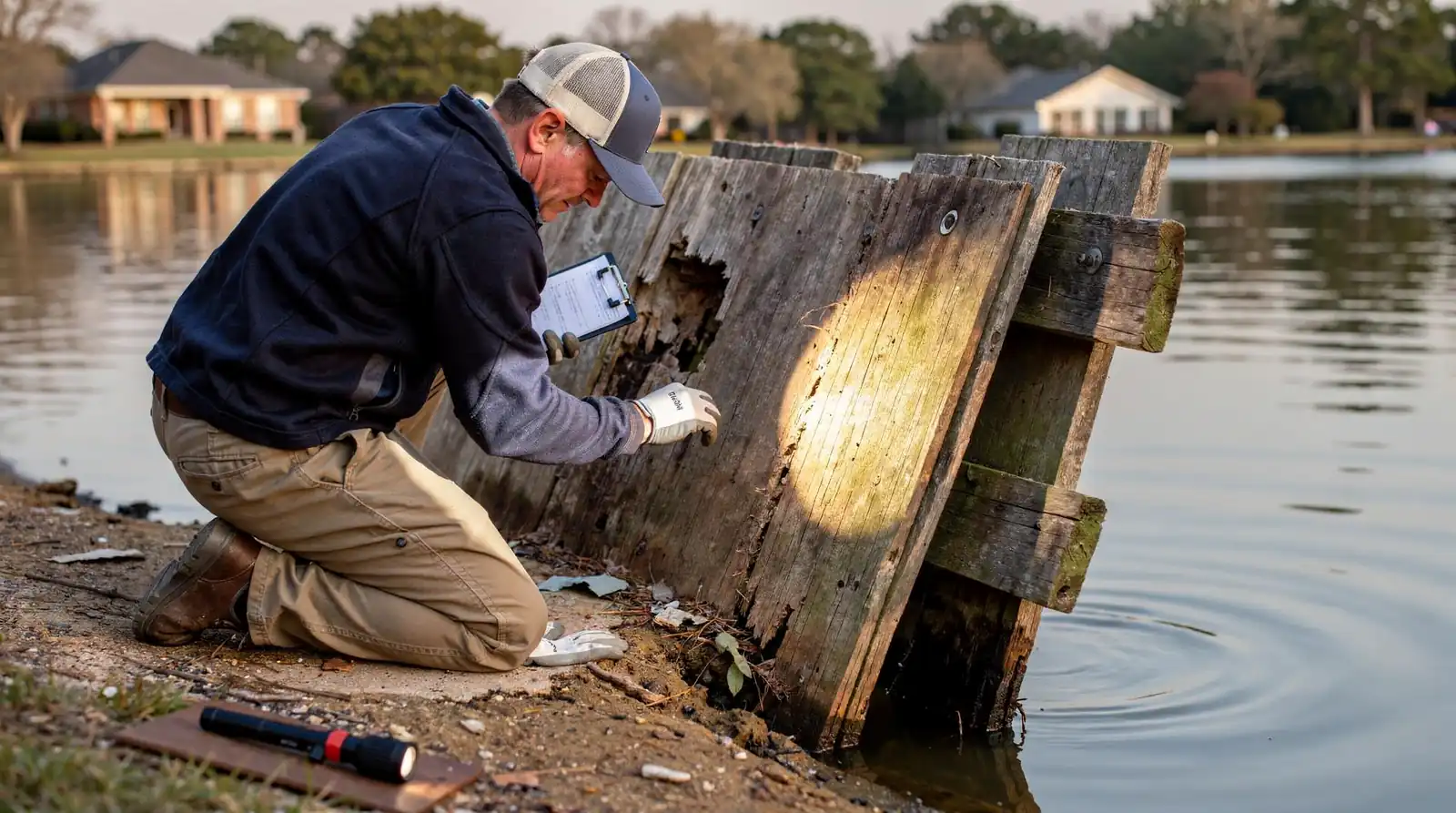
What Warning Signs Signal Bulkhead Rodent Damage?
A leaning wall, patches of rot, or sections that have already given way tell you a structural evaluation can’t wait. Lake Conroe shorelines depend on that wall doing its job every single day. A properly built bulkhead stands as the barrier between open water. Your land, holding back pressure that never lets up. When burrowing rodents tunnel through the base of that structure, the barrier weakens from the inside, often before any lean is visible from your dock.
Left unaddressed, shoreline erosion creeps in fast. Water finds every gap a burrow leaves behind. Over time it eats away at landscaping, docks, and even the foundation of nearby structures. That’s why bulkhead rodent control in Lake Conroe matters as much as the carpentry itself. A beautiful new wall built over an active burrow network is a short-term fix at best.
What rodents cause the most bulkhead damage on Lake Conroe?
Muskrats and beavers cause the bulk of shoreline tunneling around Lake Conroe, digging burrows that run beneath the waterline and destabilize fill soil. In wetter coves and canal-front lots, nutria removal in Montgomery, TX properties has become a recurring need, since nutria dig aggressively and reproduce quickly. Left alone, these populations can turn a solid bulkhead into a hollow shell within a season or two.
How do you know if your dock area needs rodent inspection?
Watch for fresh burrow openings at the waterline, soft or sinking soil near pilings, and matted vegetation trails leading into the bank. Homeowners pursuing waterfront rodent control in Willis, TX often notice these signs first near boat ramps and low-lying yard edges. Catching burrowing activity early keeps your shoreline structure sound and your repair costs contained.
Do Lake Conroe Bulkhead Repairs Need SJRA Permits?
Yes, most bulkhead work on Lake Conroe requires a permit. Any construction or repair below elevation 201 triggers licensing requirements through the San Jacinto River Authority, commonly known as SJRA. Skipping this step risks stop-work orders, fines, or a bulkhead that has to be torn out and redone.
SJRA owns and maintains Lake Conroe and its dam. That authority extends to regulating and licensing construction activity on the water, from bulkheads to boat docks and other waterfront structures. If your property sits below that elevation line, expect the permitting process to apply before crews touch your shoreline.
Why Does So Much Bulkhead Work Involve Repairs, Not New Builds?
Lake Conroe’s shoreline is already heavily armored. Most projects today involve replacing, repairing, or extending walls built decades ago, rather than constructing brand-new bulkheads from scratch. That matters for permitting, since repair and replacement work still falls under SJRA’s licensing rules even when a wall has existed for years.
Do I Need a Licensed Contractor for Permitted Work?
Working with a licensed, insured marine contractor keeps your project compliant and your timeline predictable. Contractors serving Lake Conroe alongside Lake Livingston. The greater Houston Gulf Coast understand SJRA’s process and how it intersects with shoreline rodent pressure.
Bulkhead repairs and waterfront rodent control in Willis, TX often go hand in hand, since aging walls create burrowing opportunities along the waterline. Critter Gitters travels to Lake Conroe properties for **bulkhead rodent control in Lake Conroe**. nutria removal in Montgomery, TX, protecting your shoreline investment long after permitted repairs wrap up.
How Can Lake Conroe Homeowners Protect Their Shoreline?
Two threats work against your Lake Conroe shoreline at once: burrowing rodents and structural wear. Left unchecked, both weaken the ground beneath your bulkhead and threaten the investment you’ve made in your waterfront property. Protecting the shoreline means addressing each threat with a plan, not a one-time fix.
Rodent activity deserves attention first. Burrowing animals tunnel into embankments and shoreline walls. Their tunnels create hidden pathways for water to seep through and erode the soil around your foundation. Preserving the long-term integrity of any shoreline structure depends on keeping burrowing activity in check before it spreads. Bulkhead rodent control at Lake Conroe starts with identifying entry points. Burrow systems along the waterline, then closing them off for good.
Why Does Nutria Removal Matter So Much Around Montgomery, TX?
Nutria dig aggressively along soft banks and beneath structural walls, and their burrows can compromise a bulkhead’s footing over time. Nutria removal near Montgomery, TX properties calls for trained eyes that recognize early burrow signs before they turn into major repairs. Critter Gitters Pest Control, serving East Texas from its Crockett, Texas base, brings that experience to lake-community properties around Lake Conroe.
A strong bulkhead ranks among the most important structural elements guarding any waterfront home. Leaning walls, visible rot, or partial failure all signal it’s time for a professional evaluation. An experienced team can inspect the structure and recommend the right repair or replacement path.
What Does Waterfront Rodent Control Look Like in Willis, TX?
Waterfront rodent control for Willis, TX homes combines burrow elimination with ongoing monitoring near docks, seawalls, and bulkheads. Regular checks catch new activity before erosion sets in.
FAQ
What signs indicate rodent damage near a bulkhead?
Watch for small holes or tunnel openings near the waterline, soft or sunken soil behind the wall, and gaps where the bulkhead meets the shore. Muddy water pooling after rain without an obvious cause often signals a hidden burrow network.
How do muskrats and nutria damage riprap?
Burrowing rodents tunnel through the fill beneath riprap and bulkheads, hollowing out the ground that holds shorelines together. This hidden digging turns slow erosion into fast-moving structural failure on wave-battered wood bulkheads.
Who handles bulkhead rodent control at Lake Conroe?
Critter Gitters Pest Control, led by Associate Certified Entomologist Joey Baker, travels from its East Texas base to inspect rock and structural gaps and apply targeted exclusion methods against burrowing rodents.
Conclusion
In closing, protecting your Lake Conroe bulkhead and riprap from burrowing rodents requires a combination of structural barriers, regular monitoring, and professional intervention when needed. By addressing entry points, maintaining clear vegetation, and partnering with certified pest control experts who understand East Texas waterfront conditions, you safeguard your property investment and preserve the integrity of your shoreline. Proactive defense today prevents costly damage tomorrow—keeping your lakefront secure year-round.