
You pull up to the lake house on a Friday night, unlock the door and walk straight into a spider web. There are wasps under the porch roof, something has been in the pantry, and the dock looks like it’s been wrapped for Halloween. Before anyone can relax, somebody has to spend Saturday morning with a broom and a can of spray.
That’s the trouble with a house you only use now and then. Nobody is there to notice the first signs, so small problems get weeks to grow. Lake house pest control is a different job from looking after a home someone lives in every day, and it helps to know what changes when the house sits empty.
Why an empty lake house gets pests faster
A lived-in house has people in it. Doors open and close, lights come on, somebody sweeps the porch, and when a mouse leaves droppings in a drawer it gets noticed that week. All of that keeps pests from settling in.
A weekend place has none of it. The house is quiet and dark for days or weeks at a time, and that suits pests fine. Add what comes with being on the water in East Texas and you have a busy spot:
- Water and humidity. Mosquitoes breed near the water, and damp wood draws carpenter ants and termites.
- Lights over the water. Dock and porch lights pull in flying insects at night, and spiders build where the food is.
- Woods right behind the house. Mice, rats, raccoons, squirrels and opossums are already living close by.
- Stored things. Boat cushions, life jackets, bedding and a pantry that stays stocked all make good cover and good food.
- Nobody watching. A problem that would be caught in a day at home can run for a month at the lake.
What moves in between visits
These are the ones we see most at lake houses and cabins.
Spiders. Orb weavers string big webs between trees, across walkways and over doorways. Wolf spiders hunt on decks at night. Black widows like the undisturbed spots: under boats, in storage rooms and around docks.
Wasps. Paper wasps, red wasps and mud daubers nest under eaves, on boats, around docks and even on porch furniture. A nest that would be knocked down early at home can be full size by your next visit.
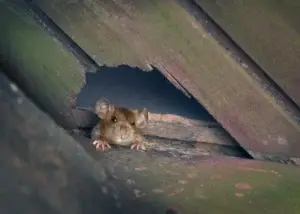
Mice and rats. A lake property gives them food, water and shelter. They nest in storage areas, chew wiring in boats and equipment, and get into stored food and linens. They push indoors harder once the weather turns cool. Our post on mice in the winter covers what to look for.
Ants. Fire ants like sandy lakefront soil and build mounds in yards, around docks and along walkways. Indoors, ants follow plumbing lines and moisture into kitchens and bathrooms.
Termites and carpenter ants. Lake humidity is hard on wood. Homes, cabins, decks and docks can all be affected, and in an empty house there’s nobody to spot a swarm or a pile of sawdust.
Raccoons, squirrels and other wildlife
Raccoons, squirrels and opossums get into attics and crawlspaces, and an empty house gives them plenty of quiet time to do it. Raccoons in an attic tear up insulation and foul it, and squirrels gnaw on wiring. Trapping alone doesn’t fix it, because the gap they used is still open for the next animal. The lasting fix is to remove the animal and then seal the entry points.
We handle wildlife removal and exclusion in the Crockett and Houston County area. If your place is farther out, call and we’ll tell you plainly what we can cover there.
What gets checked and treated while you’re away
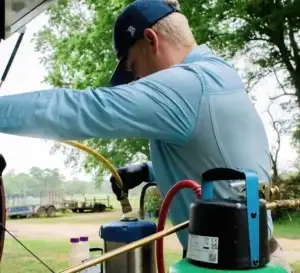
We start with a free inspection, the same as any other home. We look at the house, the outbuildings and the water side, find out what’s already there, and give you a price before any work starts. We don’t quote a lake house over the phone, because two cabins on the same road can need very different things.
After that, most weekend places do well on one of our home pest control plans, with a visit every three months. Regular visits matter more for an empty house than a full one, because the service is doing the watching that you can’t. A visit includes:
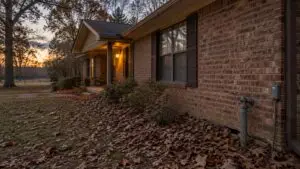
- Treating the outside of the house, the places pests get in, and cracks and crevices, plus the inside when we have access.
- Knocking down spider webs and wasp nests within reach as part of the visit.
- On the plans that include them, checking outside rodent stations and treating the yard for fire ants.
- Telling you what we found, so you know what’s going on at a house you haven’t seen in a month.
If covered pests come back between visits, customers on a recurring plan get a re-service at no charge. That matters at a lake house, where you may walk in on a problem on a Friday and want it handled before the next trip. You can compare what each plan covers on our packages page.
Docks and boat houses
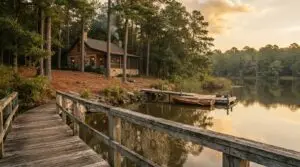
The water side is usually the worst part of the property for webs. For docks and boat houses we do de-webbing and web treatment, so you’re not clearing the ladder and the boat lift by hand every trip. If spiders at the water are your main complaint, we wrote a separate post on spider control for boathouses.
Mosquitoes when you only use the place on weekends
Mosquitoes are the complaint we hear most from lake owners. The usual question is whether it’s worth treating a yard you only use a few days a month. It is, because you want those few days to be the good ones.
Our Mosquito Duo Defense works two ways. On each visit we fog the shady places where adult mosquitoes rest during the day, such as shrubs, fence lines, eaves and under decks. We also set In2Care stations around the yard. A mosquito that lands in a station picks up a larvicide and carries it to the water where it breeds, including spots nobody can see or reach.
Service runs monthly from March through October, so the yard is treated on a schedule whether you were there last weekend or not. It’s added to a pest control plan and isn’t sold on its own, because on its own it doesn’t work as well. More detail is on our mosquito control page.
You can help between visits. Before you lock up, tip out anything that holds water: buckets, plant saucers, kayaks, coolers, boat covers and the kids’ toys. Clean gutters matter too.
A short checklist before you close up for winter
Most lake houses get used less from November to March, and that’s when mice and wildlife are looking for a warm place. A half hour before you leave makes a real difference.
- Empty the pantry or put everything in hard plastic, glass or metal containers. Cardboard and bags won’t stop a mouse.
- Take the trash with you and rinse the cans.
- Don’t leave pet food or bird seed in the house, garage or boat house.
- Store bedding, cushions and life jackets in sealed bins off the floor.
- Walk the outside. Look for gaps around pipes, vents, doors and the roofline, and note anything new.
- Move firewood away from the house and up off the ground.
- Trim back branches and brush that touch the house or the roof.
- Tip out standing water and store buckets and toys upside down.
- Tell us if you saw anything. Droppings, scratching sounds or chewed items are worth a call before the house sits for two months.
How service works when you’re not there
You don’t have to drive up to meet us. The outside work, the dock and the yard can all be done while you’re away. For the inside, we work out access with you ahead of time, or we time the visit for a weekend you’ll be there. We can plan visits around when you use the property, and around bookings if you rent it out.
Lake house customers tell us two things matter most to them: the place gets serviced while they’re gone, and they get a reminder when the next service is due. That’s how we try to run it. You shouldn’t have to remember your lake house’s pest schedule on top of everything else.
Our treatments are eco-friendly and pet friendly. If you’re bringing the dog up right after a visit, keep pets off treated areas until the product has dried.
We’re based in Crockett and work across Houston County, and we look after lake homes and cabins on the Trinity County side of Lake Livingston. See our Lake Livingston pest control page for more on that area.
Frequently asked questions
Do I need to be at the lake house for a service visit?
Not for the outside, the yard or the dock. For inside treatment we either arrange access with you beforehand or schedule the visit for a time you’ll be there.
How often should an empty lake house be treated?
Our home plans are built around a visit every three months, and that suits most weekend places. Mosquito service is separate and runs monthly from March through October.
Can I just treat it once before summer?
We do offer one-time treatments. For a house that sits empty, a recurring plan usually works out better, because pests keep arriving all year and nobody is there to catch them early.
Do you treat docks and boat houses?
Yes. We de-web and treat docks and boat houses for spiders, and wasp nests within reach are removed as part of a regular visit.
How much does lake house pest control cost?
It depends on the house, the outbuildings and what we find, so we price after a free inspection. You get the price before any work starts.
We rent our lake house out. Can you work around guests?
Yes. We schedule around bookings so visits happen between guests where possible.
Want the lake house ready when you get there? Call Critter Gitters at 936-261-7965 for a free inspection. We’ll look over the house, the yard and the dock, and tell you what it needs before your next trip.