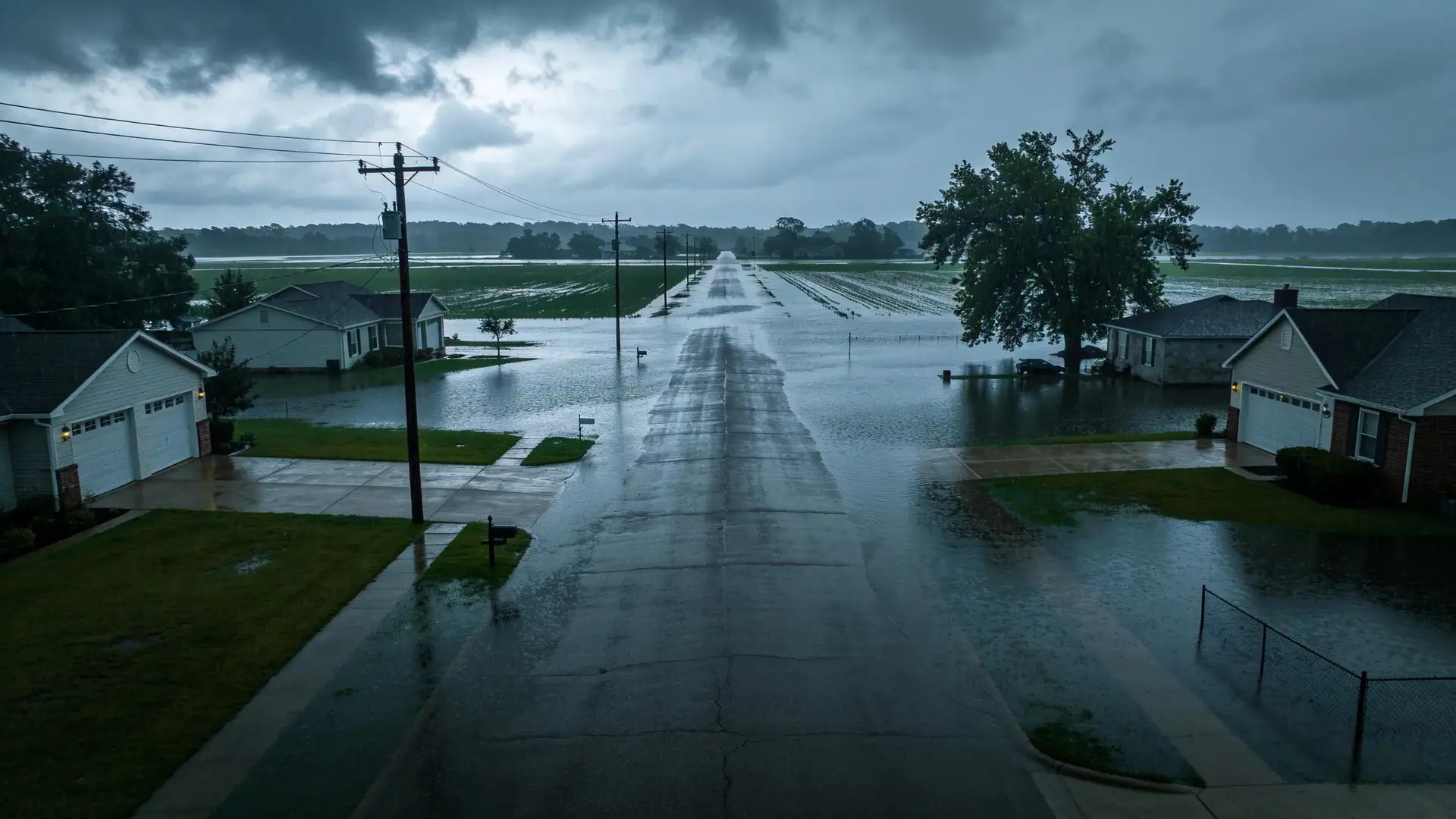
August heat and humidity push mosquito activity to its peak across East Texas, with June rains leaving standing water where females lay eggs. Populations explode fast, and outdoor time becomes miserable. Critter Gitters Pest Control targets breeding sites directly, cutting numbers at the source instead of masking the problem for a few hours.
Key Takeaways
- Temperatures consistently above 50° activate mosquitoes, with Texas mosquito season lasting February through November annually.
- Recent rainfall creates ideal breeding conditions by producing standing water where mosquitoes lay eggs rapidly.
- East Texas experiences one of the longest mosquito seasons in the nation, extending year-round in some areas.
- Warm, humid weather combined with moisture produces perfect conditions for explosive mosquito population growth in August.
Why is this August so brutal for mosquitoes?
Heavy rain across East Texas over recent weeks left standing water pooled in ditches, gutters, tarps, and low-lying yards. That standing water gives female mosquitoes exactly what they need to lay larva by the hundreds. The result: a population boom that feels louder and worse than last year, right when you want to enjoy your yard.
Your neighborhood isn’t imagining it, either. Even a brutal winter storm earlier this year failed to knock the population down the way you might expect. Instead, mosquitoes bounced back stronger than expected once warm, wet conditions returned this spring and summer.
Why does East Texas get hit harder than other parts of the state?
East and Central Texas carry far larger mosquito populations than the drier regions farther west. Humidity, rainfall, and dense vegetation give mosquitoes more breeding grounds and more places to hide from the sun. If you live in Crockett or a nearby East Texas community, that regional pattern works against you every summer.
Is August really the worst month?
Yes — August sits inside the peak stretch that runs through June, July, and August. Mosquito activity climbs steadily through early summer and holds strong until temperatures start dropping in fall. That means your yard isn’t just dealing with leftover spring mosquitoes; it’s facing the full weight of peak-season breeding.
Two forces are stacking on top of each other right now:
- Rain-driven breeding sites multiplying around your property
- Seasonal timing that puts August at the height of activity
Professionals target both problems at the source, not just the symptoms buzzing around your porch light.
How long does mosquito season really last here?
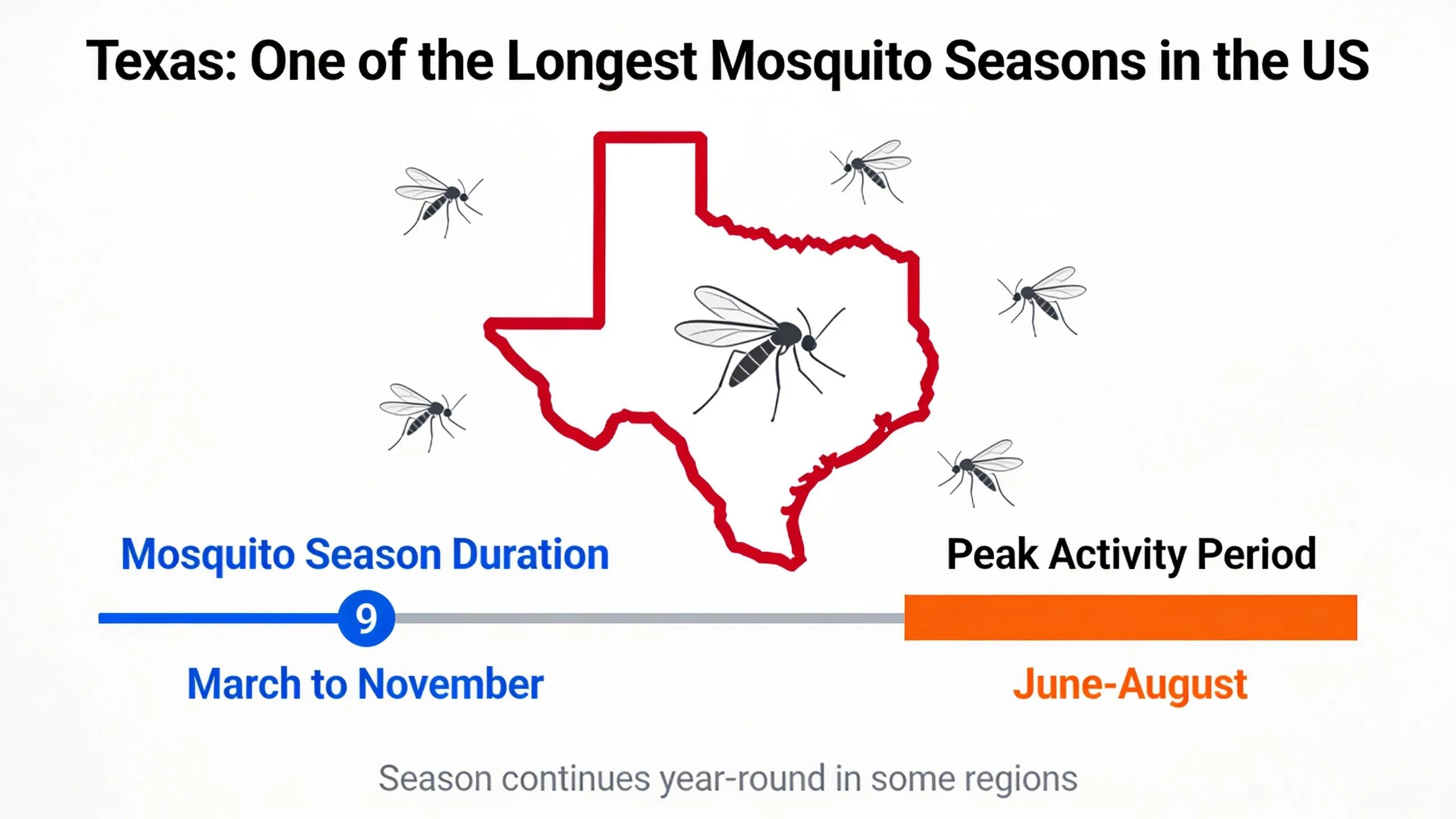
Nine months, sometimes more. Texas holds one of the longest mosquito seasons in the entire country. Yours in East Texas keeps getting longer every year. That heavy swarm hitting your backyard in August isn’t a fluke. It’s the peak of a season that started long before summer even arrived.
Mosquitoes switch on once temperatures hold steady above 50 degrees. In warmer stretches of Texas, they never fully shut off, staying active straight through winter. For your property, that means the biting window realistically opens in February and doesn’t close until November.
When does mosquito activity peak in East Texas?
June through August brings the worst of it, which explains why your yard feels unbearable right now. Heat and humidity during these months create ideal breeding conditions. Any standing water nearby becomes a nursery for the next wave.
Why does the season keep stretching longer each year?
Warmer average temperatures push the “above 50 degrees” threshold earlier into the calendar and later into fall. That gives mosquitoes more weeks to breed, feed, and multiply before die-off ever happens.
Here’s how the season typically breaks down for East Texas homeowners:
- February–April: Activity begins as temperatures stabilize
- May–August: Peak breeding and biting season
- September–November: Activity slows but doesn’t stop
- December–January: Reduced activity, rarely a full stop
You need protection that spans this entire stretch, not just a one-time spray in July. Mosquito control in Crockett, TX works best as an ongoing plan, and Critter Gitters Pest Control has applied science-based, understanding-first solutions across East Texas for years.
Are August mosquitoes a health risk for your family?
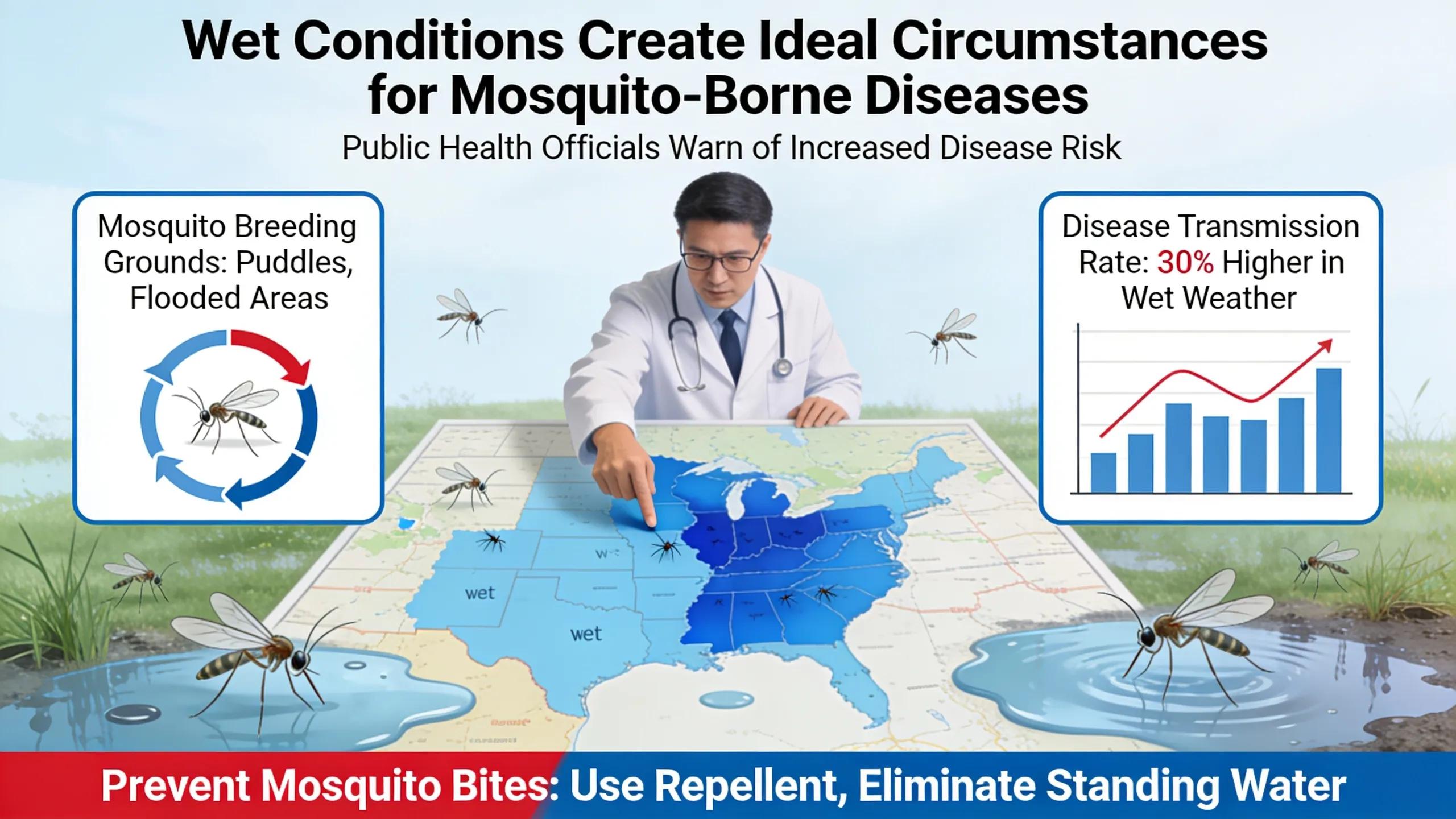
Yes — August mosquito swarms in East Texas carry real health risk, not just itchy annoyance. Wet conditions this season have created ideal circumstances for mosquito-borne diseases to emerge or spread across the region, according to public health officials monitoring local trends. That means your backyard cookout isn’t just uncomfortable; it’s a potential exposure point.
Public health leaders classify mosquitoes as a genuine threat to community health, not a passing seasonal nuisance you can ignore. Officials keep close tabs on the situation specifically because rain-heavy summers raise the odds of new or emerging diseases showing up in East Texas neighborhoods. Your yard, if it’s holding water, could be part of the problem.
What should you actually do about it?
City officials and pest control experts agree on one simple starting point: eliminate standing water around your property. Buckets, clogged gutters, birdbaths, and old tires all qualify as breeding grounds. Pet owners face an added risk — mosquitoes transmit heartworms. Protecting your dog or cat matters as much as protecting your family.
Does DIY water removal solve the whole problem?
Not entirely. Draining puddles helps, but eggs and larvae can hide in spots you’ll never spot from the porch.
That’s where **mosquito control in Crockett, TX** earns its value. A trained team inspects your property first, identifying hidden breeding sites before applying any treatment. This inspection-first approach targets the actual cause of your mosquito pressure, rather than offering a quick spray that wears off in days and leaves you calling again next week.
What can you do around your yard right now?
Dump the standing water first. Any container holding water for more than a few days becomes a mosquito nursery in your East Texas backyard, whether it’s a clogged gutter, a forgotten kiddie pool, or a plant saucer under your porch ferns. Larvae need to reach the water’s surface to breathe before they hatch into biting adults. Tip out that water and you cut off their air supply before they ever get the chance.
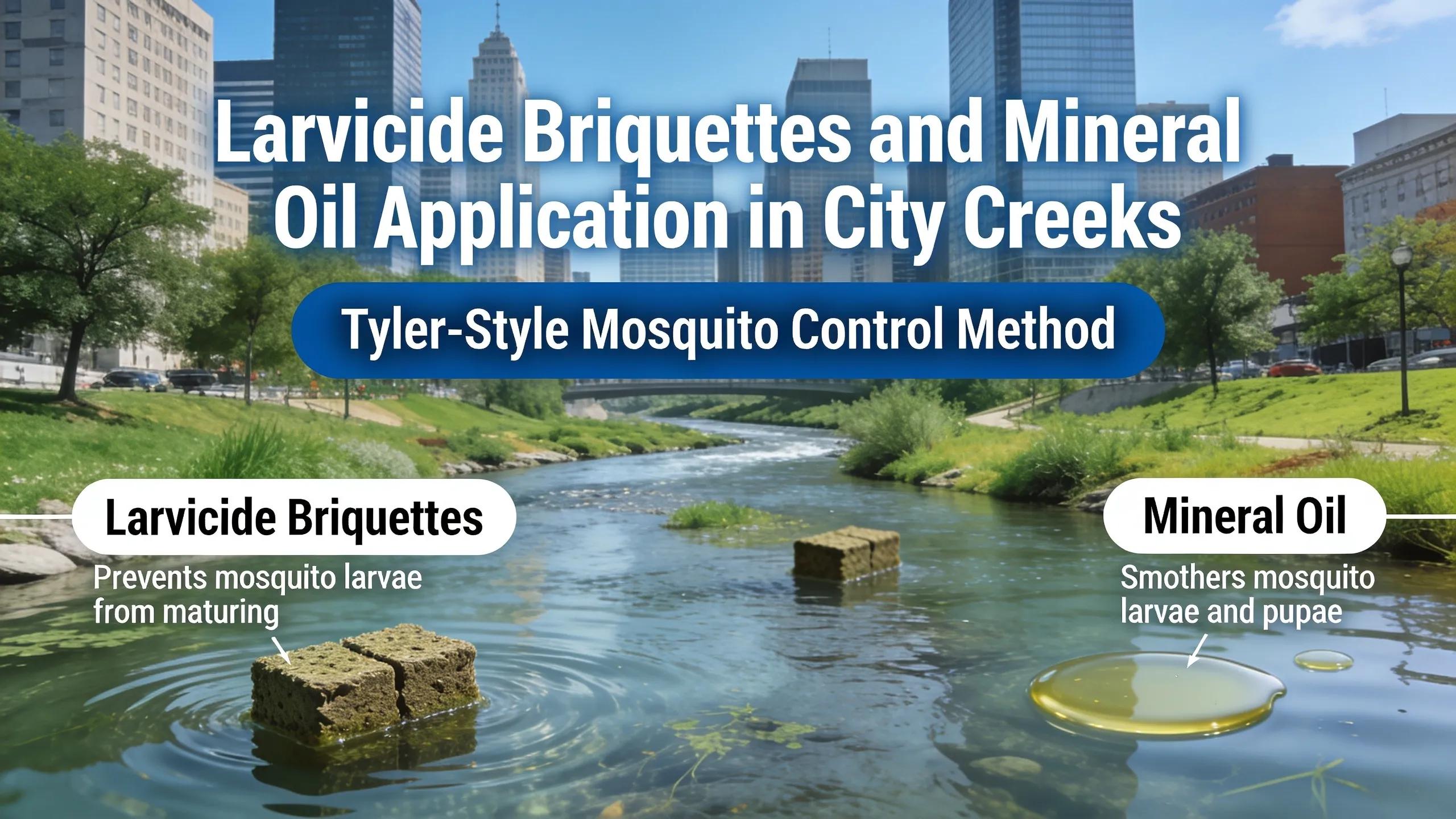
Local officials use the same logic on a bigger scale. Municipal crews in cities like Tyler drop larvicide briquettes into creeks and streams. Coat standing water with mineral oil so larvae can’t surface to breathe year-round. You can apply that same principle at home with far less equipment.
Why do mosquitoes keep coming back to my yard even after I dump the water?
Overgrown grass, thick shrubs, and untended low spots hold moisture longer than you’d expect. Vegetation combined with water nobody’s watching creates an easy breeding ground, and mosquitoes take full advantage. Walk your property every few days, especially after rain, and check the same shady, damp corners each time.
What should I wear if I’m working outside during peak mosquito hours?
Cover up with loose-fitting, long-sleeved shirts and pants rather than tight clothing mosquitoes can bite through. Pair that with an EPA-registered repellent applied to exposed skin before you head out.
Quick yard checklist:
- Empty gutters, buckets, saucers, and toys weekly
- Trim tall grass and thick brush near the house
- Treat unavoidable standing water rather than letting it sit
Small habits like these make a measurable dent in your yard’s mosquito population before you ever call in reinforcements.
When should you call a professional in Crockett?
Bites piling up faster than you can swat them signal a problem beyond backyard sprays and citronella candles. Standing water, thick brush, and repeat swarms around your patio mean the population has outgrown DIY fixes. That’s your cue to bring in trained help before the season gets worse.
Critter Gitters Pest Control offers mosquito control in Crockett, TX homeowners can count on, built into a broader residential pest program covering ants, roaches, and more. You’re not hiring a one-trick sprayer. You’re getting a full-service partner who understands how mosquitoes fit into your yard’s larger pest picture.
How is Critter Gitters different from a general exterminator?
Leadership matters here. Critter Gitters is guided by an Associate Certified Entomologist, which means every treatment plan draws on real scientific training, not guesswork. That combination of science, field experience, and genuine care shapes how your property gets evaluated and treated.
Choosing this team means partnering with certified professionals, not a rotating cast of unfamiliar faces. Your home, your family’s health, and your comfort stay the priority, backed by integrity at every visit.
Does Critter Gitters serve homes outside Crockett?
Yes. Coverage extends across Houston County and neighboring East Texas communities, so nearby homeowners get the same standard of care.
A few signs it’s time to call rather than wait:
- Mosquito bites appear daily, even during short outdoor stays
- Standing water keeps returning after you’ve dumped it
- Family gatherings or pets get disrupted by constant swarming
These aren’t technicians running through a checklist — they’re pest management professionals focused on your household’s peace of mind.
August’s mosquito surge in East Texas stems from the region’s warm, humid climate and abundant standing water—ideal breeding conditions that create explosive population growth. Understanding these seasonal patterns helps property owners take proactive steps to reduce breeding sites and protect their families. Whether through professional treatment or preventive measures, addressing mosquitoes now delivers the relief and peace of mind your home deserves during peak season.
FAQ
Why are mosquitoes so bad in East Texas this August?
Heavy recent rainfall left standing water in ditches, gutters, tarps, and low-lying yards, giving female mosquitoes ideal spots to lay eggs by the hundreds. Combined with August heat and humidity, populations explode fast.
Why does East Texas suffer worse than other parts of the state?
Humidity, rainfall, and dense vegetation give East and Central Texas mosquitoes more breeding grounds and hiding spots than drier western regions. Communities like Crockett face this regional pattern every summer.
How does Critter Gitters Pest Control address the problem?
Critter Gitters Pest Control targets breeding sites directly, cutting mosquito numbers at the source instead of just masking the problem temporarily. Their approach in Crockett, TX addresses both standing water and peak-season breeding.